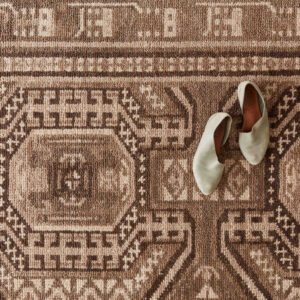
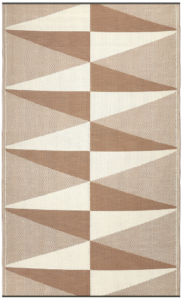
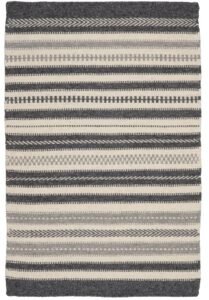
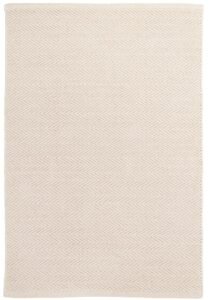
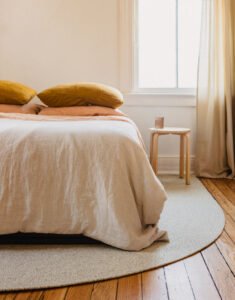
An area rug can change the entire feeling of a room. It softens footsteps, brings warmth to hard flooring, absorbs some everyday sound and can give a space the color or texture it was missing. But the fiber on the surface is only part of what you’re bringing home. Backings, adhesives, dyes and stain-resistant finishes are worth looking at too.
Here are beautiful natural-fiber rugs, washable options and more affordable choices worth exploring. Some have independent certifications, while others are worth considering for their straightforward construction or craftsmanship. The idea is to help you find the right rug for your space without pretending that every product from a good brand is made the same way.
Some links may earn Aalign a commission at no additional cost to you. Our ratings reflect the individual rugs, not affiliate relationships.
Rugs come in an enormous range of textures and materials. I tend to start with the way a room is used. The most beautiful hand-knotted wool rug might be lovely in a living room, while a low-pile washable cotton rug can make more sense where kids play and snacks happen.
Natural fibers
Wool: Soft, resilient and naturally flame resistant. It can be wonderfully comfortable in a bedroom or living area, although it may shed at first and needs prompt attention to spills. Some wool rugs still have synthetic backings or adhesives.
Cotton: Soft, lightweight and often easier to wash. Great for smaller rugs, nurseries and play spaces. Cotton can stain and wear faster than some wool constructions.
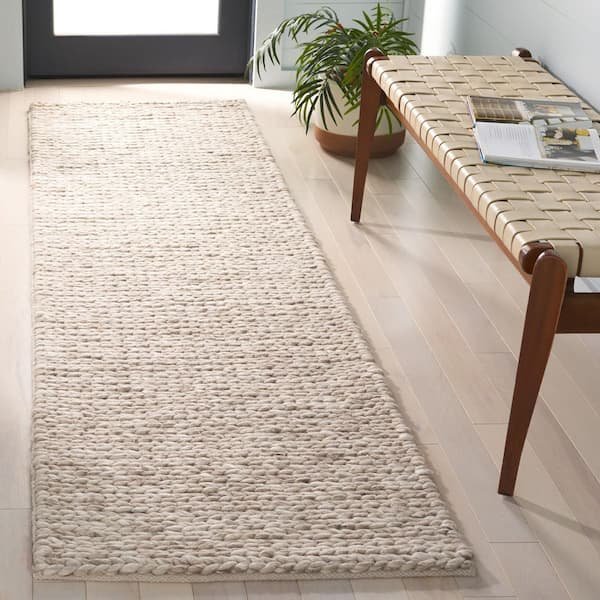
Jute: Beautiful earthy texture, usually more affordable than fine wool. Better in dry spaces. Moisture, heavy scrubbing and pet accidents can damage it.
Sisal, seagrass and coir: Useful for certain textured, durable looks, but they can feel rough underfoot and have different moisture and cleaning limitations. Coir is usually better suited to doormats than a soft living-room rug.
Hemp: A worthwhile plant fiber for texture and strength, although the complete weave and any applied backing still need checking.
Synthetic and mixed fibers
Polyester, polypropylene and nylon can be affordable, practical and easier to wash. Recycled polyester also uses existing plastic feedstock. They’re still plastic-based fibers, however, and can shed microfibers with use or washing. A certified synthetic rug may be a sensible choice for a particularly spill-prone space; it’s simply a different tradeoff from choosing wool or cotton.
A note about viscose and bamboo silk: despite plant-based origins, these are manufactured cellulose fibers. They can add sheen, but some become difficult to clean when wet. Don’t assume a rug is all wool because a collection has “wool” in its name.
Chemical Concerns in Rugs
The biggest questions aren’t answered by a “natural” label alone. Here’s what I would look at before buying:
Stain-resistant coatings: Ask whether PFAS, a family of persistent fluorinated chemicals, are intentionally added. A rug doesn’t need a special stain treatment simply because it’s marketed for families.
Backing and adhesives: Tufted rugs often need adhesive to hold fibers in place; some use synthetic latex or other binders. Hand-knotted and many flatwoven rugs may have no glued backing at all. That doesn’t automatically certify the finished rug, but it reduces one construction question.
Volatile organic compounds (VOCs): These are chemicals that can enter indoor air from some products and finishes. A persistent strong chemical odor is worth investigating; no smell alone does not prove a product is free of chemicals.
Dyes and treatments: Undyed wool is a lovely option when it suits the design. For dyed rugs, product-specific testing or certification tells us more than a vague statement that the dyes are “safe.”
What certifications tell you:GOTS addresses certified organic textile processing and relevant chemical criteria. OEKO-TEX STANDARD 100 tests textiles for specified harmful substances. GoodWeave focuses on preventing child and forced labor and supporting responsible rug-making supply chains. RWS addresses wool animal welfare and land management. GREENGUARD Gold and CRI Green Label Plus, where applicable, concern low chemical emissions. None of these labels means every possible chemical has been ruled out, and each has a different purpose.
If a rug you already own is in good condition, there’s no reason to throw it out because you don’t know every ingredient. Vacuum it properly, clean spills, keep it dry and make a more informed choice when you’re ready for a replacement.
Top Rug Brands and Individual Rugs Worth Considering
The Aalign rating belongs to the specific rug below, not the whole brand. Best indicates particularly strong materials, construction and supporting evidence for its purpose. Better is a thoughtful option with an important strength and a limitation worth understanding. Good is a practical choice with clearer tradeoffs. You don’t need a product from every rating tier to find the right rug.
Best for: Organic wool rugs, custom sizes and shoppers who want unusually detailed textile standards.
Organic Weave is one of the most interesting names already in this article. Its rugs use organic cotton and wool, with GOTS-certified options and GoodWeave certification. The brand’s custom possibilities are particularly appealing if you need a size or color that doesn’t exist in regular retail collections.
Best | Ferriss Wool Flatweave Neutral
A 100% organic wool flatweave with a geometric pattern and a charcoal accent. It’s handwoven in India and listed as GOTS and GoodWeave certified. Since it’s flatwoven, plan on an appropriate nonslip rug pad. Good to know: this is a substantial investment, and some made-to-order rugs cannot be returned.
Best | Strie Wool Flatweave Sand
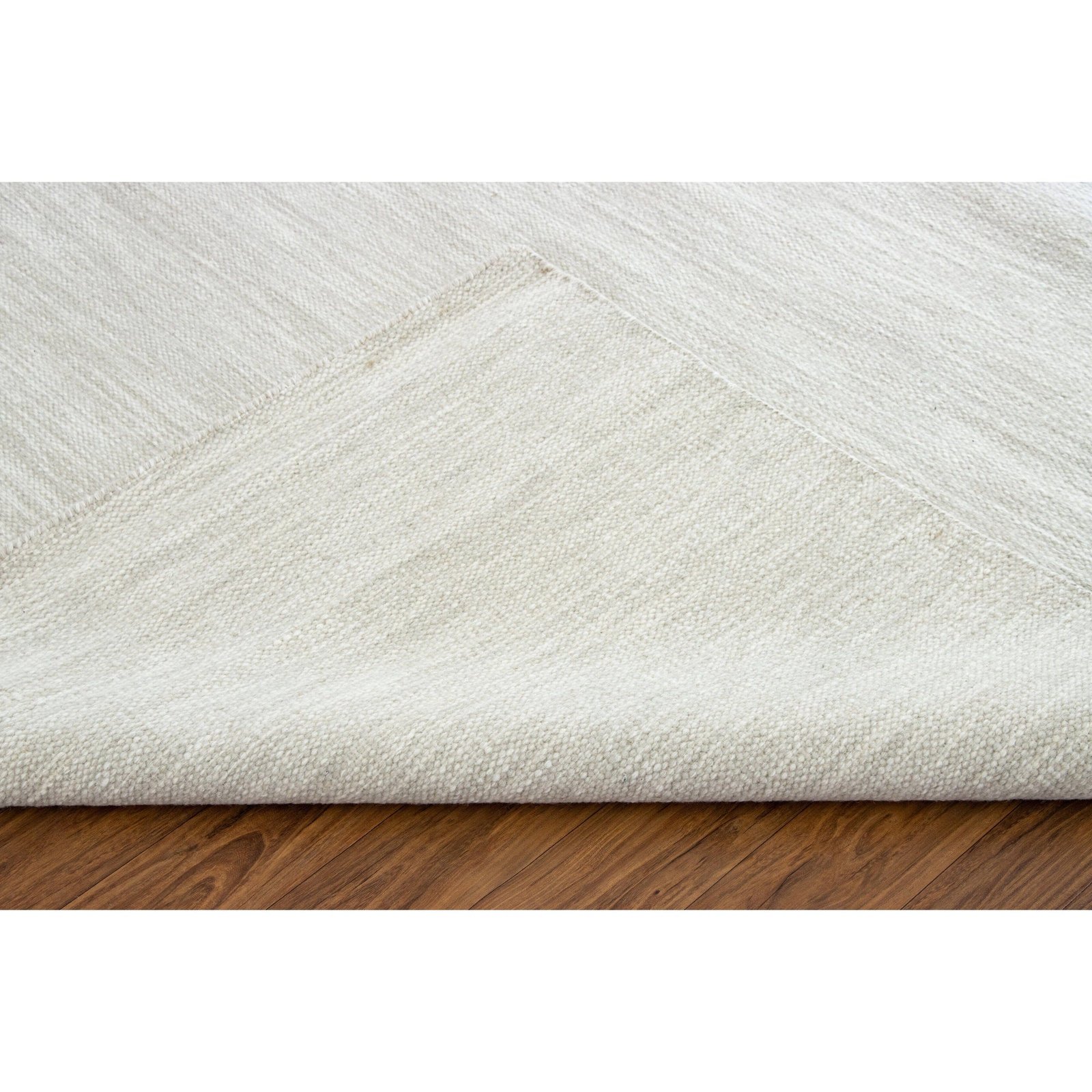
A softer, quieter look for someone who wants texture without a busy pattern. Another organic wool flatweave worth considering for bedrooms or an understated living area. Check the exact size, lead time and return terms before ordering.
Price: Premium and custom. Order a swatch if available, and confirm lead times and return terms, especially for custom work.
Best for: More accessible prices and a very broad choice of styles.
I would keep Safavieh, but only with exact product guidance. Its enormous assortment includes wool, jute and cotton blends alongside synthetic rugs. “Natura” on a listing is not a promise of 100% wool.
Good | Natura NAT254E Beige/Taupe
A warm, handwoven, softly marled rug with 70% wool, 20% viscose and 10% cotton in this model. It’s an accessible way to introduce wool texture. Good to know: the viscose component needs gentle cleaning, and I haven’t confirmed a finished-product chemical-testing certification for this exact rug. It’s a practical value choice, not an organic-wool equivalent.
Price: Budget to midrange depending on size and construction.
Best for: Rugs with personality, joyful pattern and artful color.
I still love what makes Cold Picnic different. The brand’s playful designs feel more like illustrations for the floor, and its handmade production is part of the appeal. Some rugs use wool blended with nylon, so the product name and construction really do make a difference here.
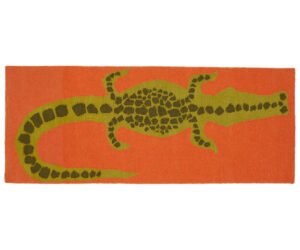
Better | Wool Flat Weave Crocodile Runner, Tomato
A wonderfully unexpected runner made with 100% wool yarn. It’s a relatively low-profile flatweave and the manufacturer describes a pleasantly scratchy, sweater-like texture. The partner factory is GoodWeave and Care & Fair certified; the brand says this production unit runs on solar power. Good to know: this is a statement piece, not a plush barefoot rug, and a pad is recommended. Do not confuse it with the wool-and-nylon Crocodile runner.
Price: Midrange to premium, depending on size and collection.
Best for: Washable rugs, children’s spaces and homes where life actually happens.
Lorena Canals helped make washable rugs feel considered rather than purely practical. Its cotton designs have playful shapes and soft colors, while the WOOLABLE range brings wool into the washable category. I would keep both, because they serve different needs.
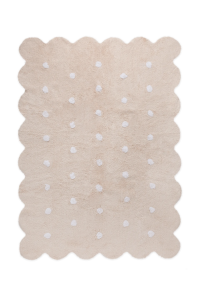
Better | Washable Rug Biscuit Beige
A scalloped, biscuit-shaped cotton rug that feels at home in a nursery or playroom. The listing gives the composition as 97% cotton and 3% other fibers in the pile, with a recycled-cotton base. Good to know: don’t call this 100% cotton, and don’t describe ISO management certifications as proof of chemical testing on this exact rug. Check your washer capacity before choosing the size.
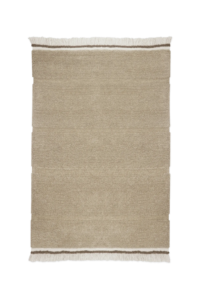
Better | WOOLABLE Steppe Sheep Beige
For someone who wants the warmth and texture of wool but likes the possibility of home washing. The listed construction is 100% wool pile and recycled-cotton base, with RWS-certified wool. Good to know: wool sheds, and the manufacturer recommends WOOLABLE rugs for children older than three because loose fibers can bother babies and toddlers playing on the floor.
Price: Midrange to premium. The cotton and wool collections vary significantly in cost and care.
Best for: A wide choice of designs, with some excellent construction details on selected rugs.
Loloi is worth keeping because you can find very different textures, sizes and prices within one brand. But I wouldn’t apply a certification or material claim across everything they sell. These two exact rugs are much more informative than a long list of collection names.
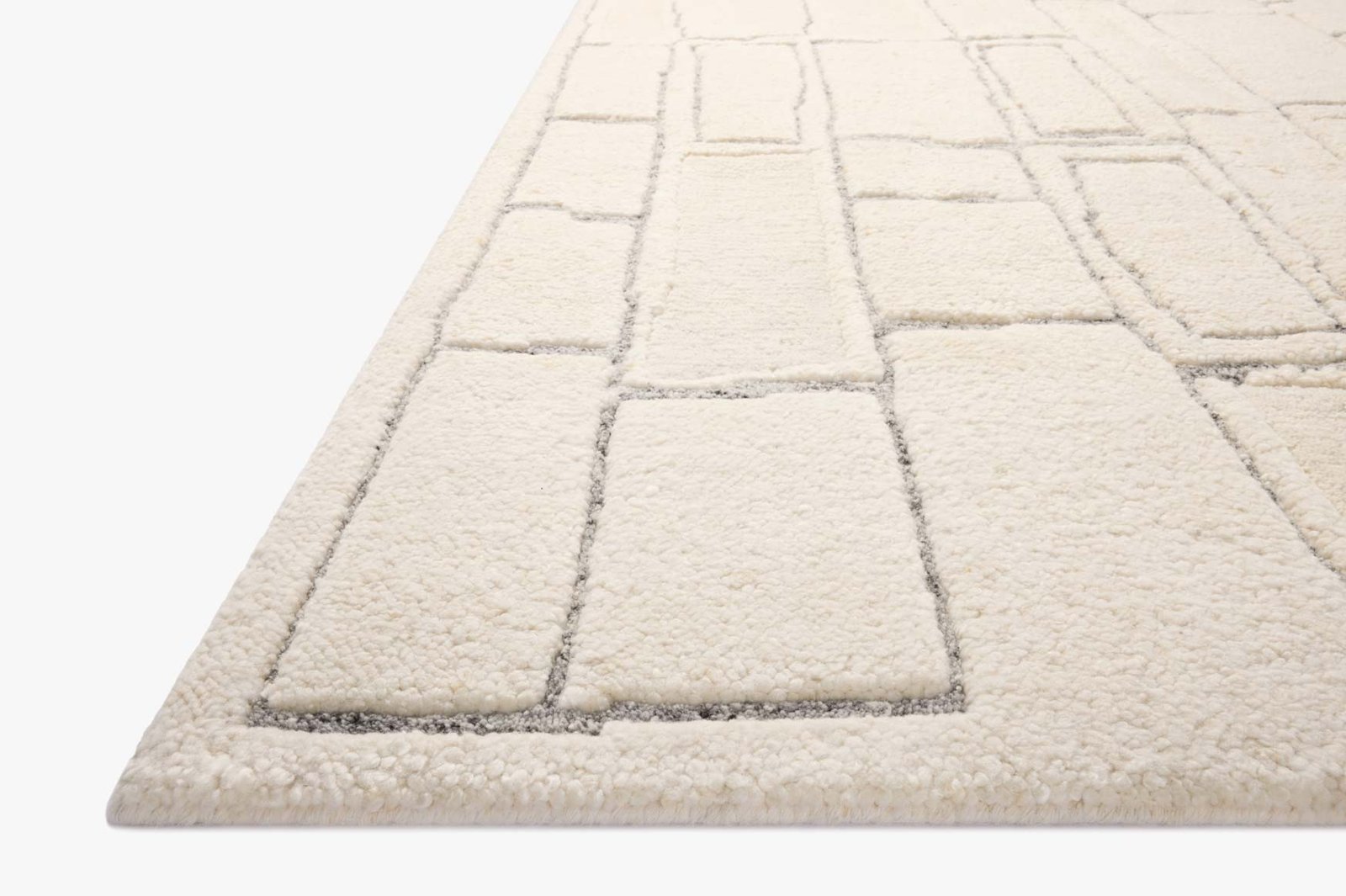
Better | Octavia OTC-03 Ivory/Slate
A plush, hand-knotted rug with 100% wool pile and no backing, made in India and GoodWeave certified. Its raised pattern brings a beautiful sense of texture without a dramatic color change. Good to know: the natural wool pile may shed initially, and the listing does not establish independent finished-product chemical testing.
Better | Magnolia Home Louie LOE-03 Natural/Espresso
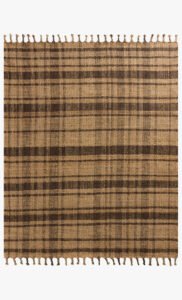
A 100% jute, handwoven plaid rug with no backing, also GoodWeave certified. I like this for casual living rooms and dining areas where a little woven texture makes the room feel warmer. Good to know: jute does not love prolonged moisture or scrubbing and can be rougher underfoot than wool.
Price: Wide range. Check the exact color, size and construction, since collections can look similar while using different fibers.
Best for: Modern rugs with strong textures and patterns, including natural-fiber designs.
LOOMY has a distinctive visual point of view, and I would preserve the brand’s place in this article. Its materials vary considerably, so the specific rug should lead the recommendation.
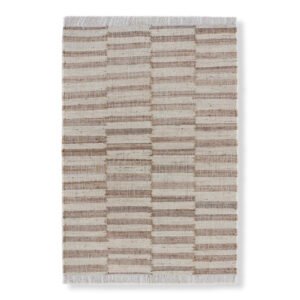
Better | Striped Jute
Handwoven from 90% jute and 10% cotton in India. A good choice for adding graphic lines and earthy texture to a hallway or living room. Good to know: plant fiber isn’t the same as washable, and the brand’s broad statements about chemicals still need product-level documentation before we claim a particular testing certification.
Price: Midrange, with custom options for select designs.
Best for: A machine-washable rug when spills and easy maintenance come first.
Revival’s washable line brings plenty of style to a very practical category. It’s worth showing as a conventional option instead of placing it on the same material footing as organic wool.
Good | Shell Washable Rug
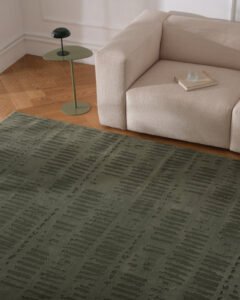
A gently sculpted, tonal rug made from recycled polyester in Revival’s OEKO-TEX-certified washable collection. It can be a sensible option for a busy room where a washable surface is the priority. Good to know: it’s plastic-based, can release microfibers over time, and large sizes may not fit an ordinary washing machine.
Price: Depends significantly on size. Check machine capacity before ordering a large washable rug.
Nordic Knots
Best for: Restrained design, beautiful wool color and a more tailored, hotel-like feeling.
Nordic Knots is one of those brands where the simplicity is the attraction. The scale, texture and rich colors are what make the rug feel special rather than a busy motif.
Better | Grand Sand
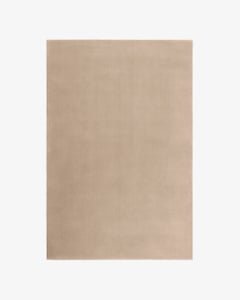
A softly plush, hand-loomed design with a 100% New Zealand wool face and GoodWeave certification. Lovely for bedrooms and relaxed living spaces. Good to know: the face-fiber information is clear, but the published description I reviewed did not fully establish the backing and adhesive details. Those remain to verify before an upper-tier rating.
Price: Premium. Sample the color and texture if you are deciding between similar neutral shades.
The Citizenry
Best for: Beautiful hand-knotted rugs with artisan craftsmanship.
The Citizenry combines designs that feel collected rather than mass-produced with specific information about the makers. It’s especially appealing when you want color and a craft story in a room.
Better | Harita Hand-Knotted Area Rug
Made with 100% New Zealand wool by a weaving collective in India. The product page states OEKO-TEX certification and offers Cocoa and Aegean colors. Good to know: verify the exact product certificate and backing details before describing it as a low-emission rug. Check oversized-item return fees.
Price: Premium. Check oversized-item return fees and delivery terms.
Fab Habitat
Best for: Outdoor patios, balconies and other places where an indoor wool rug would be impractical.
A natural fiber rug isn’t always the right answer, especially where it will sit in rain and sun. Fab Habitat uses recycled plastic to make lightweight, weather-resistant outdoor rugs with distinctive patterns.
Good | Tucson Natural Outdoor Rug
Reversible and easy to hose clean. The brand states GoodWeave certification and GRS-certified recycled plastic for this line. Good to know: it’s still plastic and may shed plastic fragments over its life. I would primarily use it outdoors, where the moisture resistance actually earns its place.
Price: Value to midrange, depending on size.
More Rug Brands Worth Exploring
Better | Hook & Loom Icelandic Grey Natural Wool Woven Rug is an appealing alternative for someone wanting reversible, undyed wool. The maker states that it uses no latex, dyes or added chemical finishes. I particularly like the straightforward construction, although I have not confirmed an independent finished-product emissions certificate.
Better | Hook & Loom Hemingway Organic Cotton Flatweave adds a genuinely useful affordable option: 100% GOTS-certified organic cotton, handwoven in India and machine washable in sizes that fit your machine. The 2-by-3-foot size is listed at $34, with larger room sizes costing more. Good to know: flat cotton offers less cushioning than a thick wool pile, and washing capacity depends on rug size.
CICIL Arch Rug is a more expensive, made-to-order design worth watching. Its curved shape is gorgeous for a bedroom, and the stated construction is 72% regional wool and 28% deadstock jute, sewn with cotton thread. We’ll keep it as a craftsmanship and innovation discovery until all product details are checked for a final rating.
Armadillo, Obakki and selected vintage-rug sellers remain interesting editorial possibilities, but there’s no reason to add a generic brand approval or a shopping button until we’ve selected an exact rug with good evidence. Likewise, not every brand in the older list needs to make the updated short list.
What About Vintage Rugs?
A vintage wool rug can be one of the loveliest things in a room. The colors are often softened by age, the pattern feels collected, and you’re giving an existing piece a new home rather than manufacturing another. Look for sound edges and foundation, the absence of mildew or musty odors, evidence of moth damage, and a reputable dealer willing to describe repairs and cleaning. Old does not automatically mean untreated or free of residues. Have a questionable vintage rug professionally assessed before bringing it into a bedroom or children’s space.
How to Choose a Rug for a Healthier, More Comfortable Space
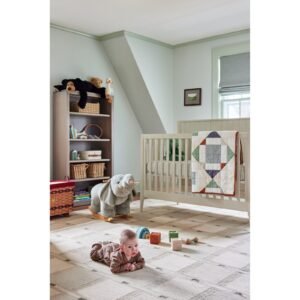
1. Start with the room. Bedrooms often benefit from a softer wool pile. Dining rooms may be easier with a flatter weave that chairs can move over. For a nursery or playroom, softness, grip, cleaning instructions and age suitability should come before the prettiest photograph.
2. Read the whole construction. Look for fiber percentages, whether the rug is hand-knotted, woven or tufted, and what keeps the fibers in place. “100% wool pile” isn’t necessarily “100% wool rug.”
3. Check the specific certification. Don’t treat a manufacturing quality standard as a chemical-testing label, or a GoodWeave labor certification as a VOC measurement. If the claim applies to selected rugs only, identify the model.
4. Think about care before you shop. Can you spot-clean it? Does it need professional washing? Can your own washing machine hold the rug when wet? If you’re going to dread every spill, a different construction may be better.
5. Choose a size that makes the room feel connected. In a living room, having at least the front legs of the sofa and chairs on the rug usually makes the space feel more intentional. For a dining table, allow enough extra room for chairs to stay on the rug when pulled out.
Don't Forget the Rug Pad
A rug pad is less glamorous than the rug itself, but it can prevent slipping, soften footsteps and help avoid bunching. For a breathable option, look for 100% felt with the thickness and floor compatibility specified. Better | RugPadUSA Contour-Lock combines recycled felt with a natural-rubber grip layer and is especially useful for flatweaves and runners that move around. It is not an all-felt pad, so check your floor manufacturer’s guidance first. If you only need cushioning under a large anchored rug, a 100% felt option may be simpler. Check your flooring manufacturer’s guidance, especially on delicate finishes, heated floors and luxury vinyl. Natural rubber is not right for every floor. Avoid old pads that are crumbling, becoming sticky or leaving marks.
How Rugs Change the Feeling of a Room
A rug does more than fill an empty rectangle on the floor. A thick wool pile softens footsteps and makes a larger room feel more settled. Jute introduces an earthy, tactile texture that works beautifully beside wood or linen. A small pattern can bring movement without overpowering furniture; a rich terracotta, tobacco or olive tone can make a pale room feel warmer. Rugs also absorb some sound and reduce hard reflections from bare floors, though the effect depends on pile, thickness, pad and room size.
I also think there’s something lovely about a rug that reflects where and how it was made. A hand-knotted surface, slightly irregular pattern or natural color variation gives a room character. That’s part of wellbeing too: living with materials and spaces we genuinely enjoy.
New Ideas in Rugs
Available now: Washable wool. Lorena Canals WOOLABLE uses flexible construction so selected wool rugs can be washed at home. It’s an innovation that solves a real problem, although size limits, shedding and care instructions still apply.
Available now: Domestic wool and reclaimed plant fiber. CICIL makes some rugs using regional East Coast wool, jute recovered from unused stock and cotton stitching. The unusual sourcing and strong design give it a place on Aalign’s radar.
Available now, but with tradeoffs: Regenerated synthetic yarns. Rugs made with recycled or regenerated plastic reduce demand for some virgin materials, and designers are experimenting with constructions that are easier to separate or recycle. Their fiber is still synthetic. I would evaluate the product’s actual lifecycle, wear and backing rather than calling recycled plastic a health benefit.
Point of Alignment
For me, a good rug has to work in real life. It should feel right underfoot, suit the way the room is used, and bring something beautiful to the space. Better information about fibers, backings, treatments and craftsmanship helps us choose without having to make every purchase complicated.