

Practical changes that make a home, classroom, or clinic easier to live in
If you are trying to make a space more comfortable for an autistic person, this is a good place to start.
Sensory input is not background noise in this conversation. Noise, lighting, texture, smell and layout can either help someone feel settled or make an ordinary day much harder than it needs to be.
The good news is that most of what helps is inexpensive, reversible, and improves the space for everyone in it.
One thing to say up front, because it shapes everything below. There is no single autism-friendly design. Sensory profiles vary enormously, and two autistic people can need opposite things. One person is calmed by deep pressure and textured fabric. Another needs smooth bedding and nothing extra on the bed. One feels grounded by shelves arranged in careful order. Another needs surfaces completely empty. Treat everything here as options to test, not a formula to apply.
In the U.S., about 1 in 31 eight-year-olds were identified with autism in the CDC‘s most recent surveillance data, collected in 2022 and published in 2025. It is common enough that sensory-aware design should be normal practice, not a specialty.
Below are practical, realistic ideas you can apply room by room.
Every brand we share is selected with health, materials, and real-world use in mind. When you shop through our affiliate links, we may earn a small commission at no extra cost to you. It’s one of the ways we keep this work going.
Start here: seven principles that actually have research behind them
Most autism design advice online is a list of things to buy.
There is an actual research-based framework behind this work, built by architect Dr. Magda Mostafa and called the ASPECTSS Design Index. It has been tested in real buildings. In plain words, the seven ideas are:
- Sound. Deal with noise and echo first. This is the one with the strongest research behind it.
- Order. Lay rooms out in the order the day happens, so moving through the space makes sense.
- A place to escape. Every space needs a small, quiet, dim spot to retreat to. This is the single most important item in the whole list.
- One job per area. Do not ask one room to be a loud play space and a quiet reading space at the same time.
- Buffers. Put something in between a busy area and a calm one, so nobody goes straight from one to the other.
- Group by feel, not just function. Keep the busy rooms together and the calm rooms together.
- Safety. Both physical safety and the feeling of safety, which comes from knowing what happens next.
Everything in the room-by-room sections below comes back to these seven ideas.
One more thing that matters: ask the person. Having a say in your own space is part of feeling in control, and that is what most of this work is protecting. If they cannot tell you in words, watch them. Where do they go when things get to be too much? Which chair do they always pick? That tells you a lot.
The four changes with the biggest return
If you only do a few things, do these.
1. Deal with the noise and echo Hard floors, bare walls and high ceilings bounce sound around, which makes normal noises feel sharp. A thick rug with a dense pad under it, lined curtains, soft furniture and a full bookshelf against a shared wall will cut echo a lot. Getting fabric onto at least two walls makes a bigger difference than most people expect. Acoustic panels work too, but soft furnishings usually get you most of the way there for less money.
2. Make a place to escape. A pop-up tent, a canopy over a corner, a closet with the door taken off and a cushion inside, or fabric hung around the bottom bunk of a bunk bed. It needs to be small, dim, quiet, and available without asking. This is not decoration. It lets someone step away before things build into a meltdown.
3. Get rid of fluorescent lighting Fluorescent tubes are the lighting problem that comes up most often in autism research. About half of people on the spectrum report real trouble with them, and one study found repetitive behaviors went up under fluorescent light compared to regular bulbs at the same brightness. The flicker is real. Most people just do not notice it.
4. Secure doors and windows if wandering is a risk. About 49% of autistic children try to leave a safe space at least once, and drowning is the leading cause of death linked to it. This is mostly a design problem, and there is a full section on it below.
Lighting: the details worth knowing
Lighting gets its own section because it is the most common trigger and the one people handle worst.
- Take out fluorescent tubes wherever you can. Swap in LED. If you cannot replace them, cheap diffuser covers over the tubes cut the glare.
- Do not assume LEDs are safe. This is the part most guides miss. Cheap LEDs flicker too, and the flicker often gets worse when you dim them on a dimmer that was not made for LEDs. Here is a quick test: point your phone camera at the lit bulb. If you see rolling bars on the screen, it is flickering. Look for bulbs labeled “flicker-free” or “low flicker.”
- Use warm bulbs, 2700K or lower, in places meant for rest. Save cooler light for work areas used during the day.
- Look for CRI 90 or higher on the box. Low-CRI light makes colors look wrong, which adds strain for someone already sensitive to what they see.
- Give them control. Dimmers, lamps on their own switches, or just a few lamps instead of one big ceiling light. Being able to change it matters as much as the setting itself.
- Soften daylight instead of blocking it. Sheer curtains take the edge off direct sun. Both harsh glare and the moving stripes of shadow from blinds come up often as problems.
- Skip bare bulbs at eye level, and go easy on spotlights and strip lights. Both come up again and again when autistic adults describe what bothers them.
Living Room Design for an Autism-Friendly Space
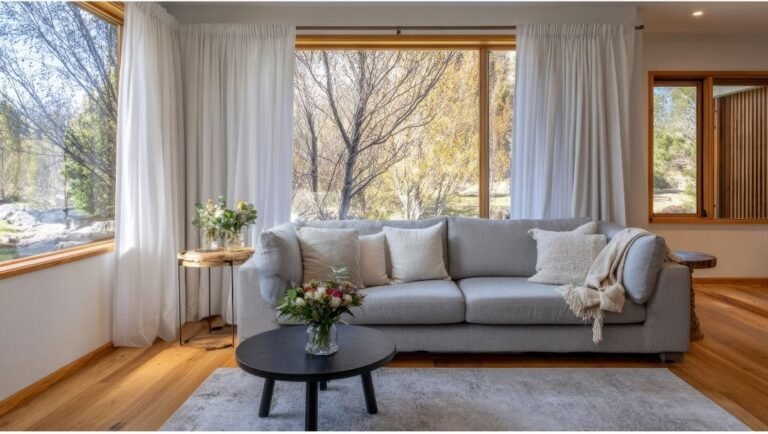
This is where everyone gathers, which makes it the busiest room in the house for the senses.
Layout
- Break the room into zones. A quiet corner, an active area, and a place to sit with other people. Rugs, shelves and the backs of furniture can mark these off without building walls.
- Keep walkways clear and the same day to day. Being able to cross a room without dodging things is part of what makes it feel safe.
- Do not move furniture around without warning. The layout is part of what makes a room predictable. If you are changing it, say so first and let them help decide.
- Put bookcases against shared walls. They block sound and hold your things at the same time.
Furniture
- Rounded edges and pieces that will not tip. Bumper guards on a coffee table cost very little. Strap tall furniture to the wall if you feel it may be needed.
- Firm seating instead of deep, squishy sofas. Firm is easier to get in and out of, and it gives the body clearer feedback about where it is.
- Washable covers you can replace. Practical, and it means a spill does not turn into a crisis.
- Offer a few kinds of seat. A beanbag, a rocking chair, a pod chair, a floor cushion. People calm themselves in different ways, and rocking is one that many reach for on their own.
Sound
- A rug with a dense pad, lined curtains, and soft furniture. These three do most of the work.
- Add wall hangings or acoustic panels if you can still hear an echo after that.
- Listen to your appliances. A rattling ceiling fan, a loud fridge, a buzzing dimmer or a humming light can be a constant background irritation that nobody has thought to name.
Bedroom Design for an Autism-Friendly Space
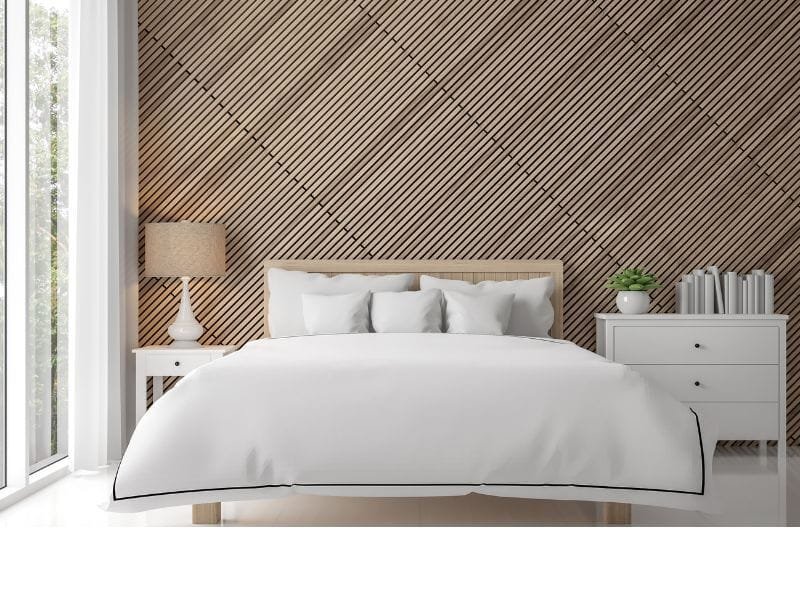
Sleep trouble is very common on the spectrum, so this room is doing real work.
Light
- Make the room properly dark. Blackout curtains or a fitted shade. Then tape over the little standby lights on chargers, TVs and speakers. Small lights at night matter more than we think.
- Warm, dim, adjustable light in the evening. 2700K or lower, on a dimmer.
- Add an amber night light near the floor if they need to get up at night. Low and warm, not cool white.
Bedding & Texture
- Personal preference. Some people want deep pressure and texture. Others need smooth, cool, light bedding and find a heavy blanket unbearable. Both are normal.
- Wash new bedding before using it, to soften it and rinse out the finishing chemicals.
- Buy a second one of whatever works. If one pillowcase or blanket is the thing that makes sleep possible, a spare for laundry day saves a bad night.
Keeping It Visually Calm
- Cut down on clutter, but find out what that means for this person. Some need clear surfaces and closed cupboards. Others need everything out where they can see it. Ask.
- Make storage predictable. Labels, clear bins, and the same thing in the same place every time. Picture labels work well for anyone who does not read yet, and they are often quicker to take in than words.
- Keep patterns simple on bedding and walls. Busy repeating patterns come up often as something people find hard to look at.
Sound
- A white or brown noise machine or a fan can cover sudden household noise, which is usually more disruptive than steady noise.
- Nature sounds or music without words work well for winding down. Keep the volume low and the same each night.
- Sleep headphones or a sound machine on a timer help if noise is a big issue.
Making It Theirs
- Let them pick the bedding, the art, and what goes on the walls. Owning the space is not a nice extra. It is part of what makes the room feel safe.
- Build in what they love. This is what turns a room into their room instead of a treatment space.
Routine
- Put a picture checklist of the bedtime steps on the wall. It makes the evening predictable and cuts down on arguing over each step.
- Keep the room for sleeping if you can. If it has to double as a play or work space, screen that part off at night so the sleeping area stays separate.
Kitchen Design for Autism-Friendly Space
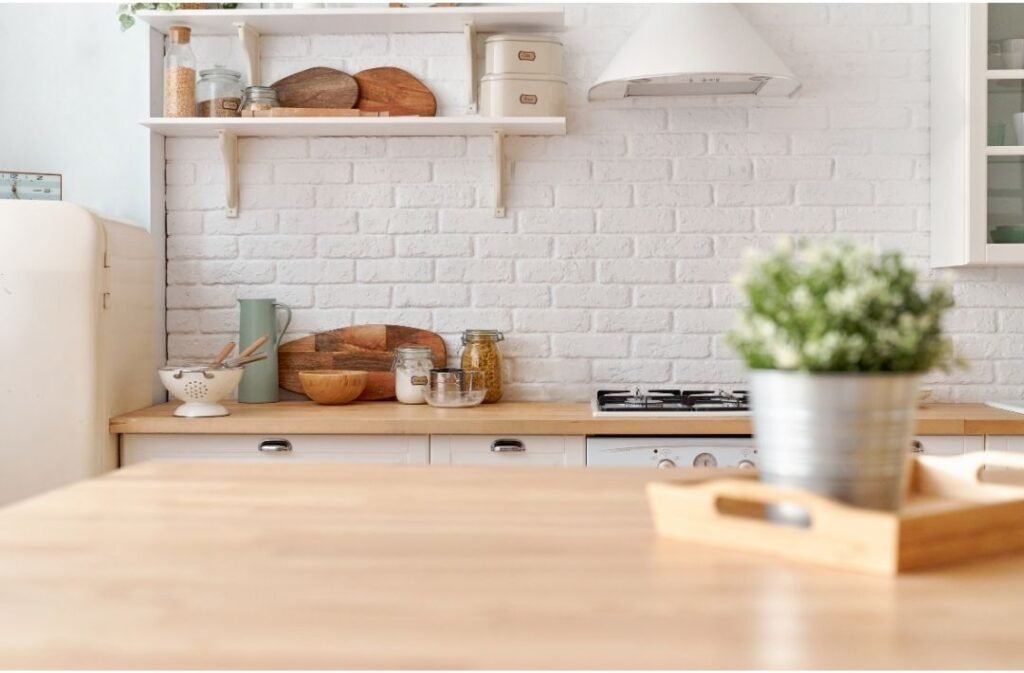
Loud machines, strong smells, hot surfaces and sharp tools. Often the hardest room in the house, and also the best place to build independence.
Noise
- This is the main issue in a kitchen. Blenders, extractor fans, dishwashers and food processors are all loud and sudden. Pick quiet models when you replace something, and use the “quiet” setting if there is one.
- Run the dishwasher when they are out of the room or asleep.
- Add soft-close hardware to cabinets and drawers. Cheap to fit, and it removes a whole set of sudden bangs.
- Warn before anything loud. A quick “blender in ten seconds” turns a surprise noise into an expected one, which solves most of the problem.
Smell
- Ventilation matters more here than anywhere else. Cooking smells can set a some people off, and they travel through the house. Use the fan, open a window, and save strong-smelling food for when you need to.
- Skip scented candles, plug-ins and air fresheners. Fragrance in a kitchen just adds another layer on top of food smells you cannot avoid. A great way to freshen up kitchen can be to use pure essential oils or make a stovetop simmer pot. Simmer water with orange or lemon slices, cinnamon sticks, cloves, rosemary, or vanilla on low heat to naturally freshen the kitchen with a warm, inviting scent. Just keep an eye on the water and refill it as needed.
Organizing For Independence
- Keep everyday things at eye level and within reach. A lot of independence is really just a storage problem.
- Use clear containers and picture labels. Being able to see inside means not having to open everything to look.
- Color-code by type if it helps. Red boards for meat, green for vegetables, and so on.
- Give paper a home. Mail and school papers spreading across the counter is visual clutter that builds up without anyone deciding to let it.
- Put up picture steps for common tasks if that helps: making toast, packing lunch, loading the dishwasher.
Safety
- Induction cooktops stay cool and have no flame. Worth thinking about if burns are a worry.
- Knob covers, appliance locks and a locked drawer for knives are simple fixes, and appliances that shut off on their own reduce risk if attention drifts partway through.
Bathroom Design for an Autism-Friendly Space
Hard surfaces, echo, temperature swings, wet floors and strong smells. A lot going on in a small room.
Safety First
- Non-slip mats in the tub, the shower and by the sink. Rubber-backed and textured.
- Fit an anti-scald device or a mixing valve. A sudden change in water temperature is both a shock and a real burn risk. The simplest version is setting your water heater to 120°F.
- Lever handles instead of round knobs. Easier to use, especially with limited hand strength.
- Check how your bathroom lock opens from outside. Most privacy locks can be opened with a coin or a small screwdriver. Find out how yours works before you need to.
Sound
- Bathrooms echo, which makes normal sounds feel sharp. A fabric shower curtain rather than just a plastic liner, thick bath mats, and something soft on a wall all soak up sound.
- Swap a loud extractor fan for a quiet one. Fan noise is rated in sones. Look for 1.0 or lower.
- Soft-close toilet seat and cabinet doors. Same idea as the kitchen.
- Hand dryers in public bathrooms are a known problem. Anywhere you control, offer paper towels as well.
Lighting
- Warm, dimmable, and never fluorescent. This is the room where harsh overhead light is most common and least needed.
- Add a motion-sensor night light near the floor so a night trip does not mean turning on the main light.
- Avoid mirrors facing each other or big mirrored walls. The repeating reflections can be disorienting.
Water And Texture
- A handheld showerhead with adjustable settings gives control over the pressure and where the water goes, which is often what decides whether showering is bearable at all.
- Soft, washed cotton towels. A hooded towel or a robe is worth considering, since it means not having to be touched while drying off.
- Keep everything fragrance-free. Unscented soap, shampoo and cleaning products. If they like a scent, make sure you use clean scents (without harmful ingredients)
Routine
- Picture guides for washing hands, brushing teeth and bathing support independence and cut down on how much you have to prompt.
- Keep the layout and the products in the same place. Moving things around undoes the routine.
Entryways, hallways and getting from room to room
Almost every guide skips this, and it is one of the seven core ideas.
- Build in a landing spot at the front door. Coming home from school or work often means arriving already worn out. A bench, somewhere to drop the bag, low light, and a minute before anyone asks a question.
- Use hallways as buffers between loud and quiet. If a bedroom opens straight onto a busy living room, a curtain, a screen or a change of rug helps mark the shift.
- Keep the lighting the same from room to room. Walking from a warm dim room into a bright cool one is a jolt. Matching bulb color across connected rooms smooths that out.
- Give warning before things change. A visual timer and a daily schedule on the wall make what comes next predictable, and predictability is doing most of the work in this whole guide.
Wandering and door safety
This is missing from most design guides, and it belongs here because the fixes are mostly built into the space.
About 49% of autistic children try to leave a safe space at some point, and the risk is highest around water. If this is your household, do this before anything to do with looks.
- Door and window alarms. Cheap battery units that chime when a door opens. This is the highest-value item on the list.
- Locks out of reach, or double-sided locks if your fire code allows it. Check the code first. Everyone in the house has to be able to get out in an emergency.
- Fence and gate the yard, with gates that close and latch on their own.
- Fully secure pools and water features, and make swim lessons a priority. Water is where wandering most often turns fatal.
- Think about a GPS tracker. Many autism nonprofits offer grants toward these.
- Give neighbors and local emergency services a heads up, with a current photo and a note on how the person communicates.
- Deal with the reason, not just the door. Wandering is often an escape from too much noise or light. A good escape space inside the house reduces the reason to leave it.
The Final Piece in Autism Support: Cutting down on chemicals

Reducing everyday chemical exposure is an important part of creating a more supportive space for someone with autism.
It is not only about choosing foods with fewer pesticides, artificial colors, flavors, and additives. It is also about being mindful of what they breathe, sleep on, touch, and spend time around every day, from mattresses and bedding to furniture, rugs, cleaning products, and more.
Aalign shares brands and products by category at our Amazon storefront, so the research is done. Low-toxin, organic, certified, or just better made, all chosen to cut down on chemical exposure at home.
Many people on the spectrum are more sensitive in general, and strong smells from paint, new furniture, cleaning products and fragrance come up constantly as a complaint. Low-VOC materials mean less smell, and less smell means fewer triggers.
So Here Is Where To Start:
- VOCs from paint, flooring, cabinets and new furniture. Choose low-VOC or zero-VOC paint, and air out new furniture before it comes inside if you can. New furniture gives off the most in its first few weeks.
- Fragrance in candles, plug-ins, cleaning products and laundry products. The easiest change on this list, and often the one people notice most. Just buy the fragrance-free version of what you already use.
- Flame retardants and PFAS in sofas, rugs and mattresses. Look for labels like GREENGUARD Gold, OEKO-TEX, GOTS or MADE SAFE. No certification is perfect, but they beat marketing words.
- Dust. A lot of this ends up in household dust. Damp dusting and a vacuum with a HEPA filter does more than most product swaps.
- Fresh air. Open windows, run the fans, and consider a HEPA air purifier in bedrooms. This is the highest-value item in this section.
- Water. In an older building, testing for lead is worth doing. What you filter depends on what the test says.
I left EMFs off this list on purpose. Some people report being sensitive to them, but the evidence does not back it up as an exposure worth worrying about, and I would rather point you at the things that are solid.
Want to go further? Start here: Reducing Harmful Toxins for Individuals on the Autism Spectrum.
About sensory tools…
Weighted lap pads, compression items, chewable jewelry, therapy putty, resistance bands and wobble cushions all come up frequently, and many people find them genuinely helpful.
Two honest caveats worth knowing:
- Evidence for weighted products is mixed. The strongest study to date, a randomized controlled trial of 63 autistic children published in Pediatrics, found weighted blankets did not increase total sleep time, help children fall asleep faster, or reduce night waking. Children and parents did tend to prefer them. So they are reasonable as comfort items that some people like, but they are not a treatment for sleep problems, and it is worth knowing that before spending significant money.
- Weight and independence matter. A person should be able to remove a weighted item themselves without help. Do not use weighted blankets with infants, toddlers, or anyone who cannot reposition independently.
Best approach: try before you buy. An occupational therapist can help identify what kind of sensory input a specific person actually seeks or avoids, which saves a great deal of money and guessing. Many of these items can be borrowed or made cheaply for testing.
Proprioceptive Input: For added comfort and proprioceptive input, use different products. Proprioceptive input helps people understand where their body is in space by receiving sensory information from muscles and joints. It is especially important for those with autism since it improves body awareness, coordination, and self-regulation. Weighted blankets, for instance, can provide proprioceptive input to promote focus and calm. Other examples include:
Compression Vest
- Body Sock
- Chewable Necklace
- Therapy Putty
- Resistance Bands
- Deep Pressure Chair
- Weighted Lap Pad
- Wobble Cushion
- Sensory Brushing Tool (Therapressure Brush)
Point of Alignment
The goal is not a space that looks like a clinic. It is a space that feels predictable, quiet enough, and under their control.