

First, what is blue light?
Blue light is one part of the visible light spectrum. The sun is a much stronger source than a typical phone or laptop, and daylight helps our bodies know when to feel awake. That is useful. We do not need to block blue light all day.
In the evening, though, the amount, timing and color of light can influence the body’s internal clock. Light rich in shorter blue wavelengths can suppress melatonin and make it harder to wind down, especially when exposure is bright or lasts a long time. The light in a room also counts. Wearing glasses while sitting under bright overhead lighting is only part of the picture.
There is another important distinction: screen discomfort is often caused by dry eyes, glare, an uncomfortable viewing distance or focusing for hours. Blue light itself has not been shown to be the main cause of ordinary digital eye strain.

I use screens at night and have trouble winding down
What may be happening: Bright evening light, particularly light with a stronger blue component, can tell your body that it is still daytime. Your phone is one source, but the ceiling lights, bathroom lighting and television in the same room may add to the exposure.
What to try first: Dim the room lights and your screen in the last hour or two before bed. Switch your device to its warmer nighttime setting. A small warm bedside lamp is more useful here than bright white ceiling lights. You do not have to buy anything to make those changes.
When glasses may be worth considering: If your evenings still involve screens or bright indoor lighting that you cannot easily change, stronger amber or orange lenses may reduce blue-rich light reaching your eyes. That does not guarantee better sleep. Trials of blue-light filtering glasses have found mixed results for sleep, and lighter clear daytime filters are not the same as strong nighttime lenses.
Affordable orange lenses: Uvex Skyper S1933X
Best for: Someone who wants to try a substantially tinted, practical option without committing to expensive frames.
What it does: These wraparound safety glasses use Honeywell’s SCT-Orange lens. They reduce short-wavelength light and cover the sides more than a typical fashion frame.
Why we like it: The actual model and tint can be identified, and its practical design is useful for reducing unwanted light from the sides.
Good to know: These are industrial safety glasses, not a product clinically proven to improve sleep. Their orange lenses strongly change how colors look. Check the exact S1933X model, not another Skyper tint.
An everyday evening option: Swanwick Sleep Swannies Classic

Best for: Someone who wants a more conventional eyeglass frame for evening reading, television or screen use.
What it does: The Sleep version uses a strongly tinted nighttime lens intended to reduce blue-rich evening light.
Why we like it: A recognizable wearable frame, with sizes and other lens options available. The brand distinguishes its Focus, Relax and Sleep lenses rather than treating every pair as interchangeable.
Good to know: Choose the actual Sleep lens if your priority is the evening. These are a much higher-priced option than safety glasses, and the claims about improving sleep are not a guarantee for everyone.
For prescription-glasses wearers: BlockBlueLight NightFall Fitover
Best for: Someone who already wears prescription glasses and wants a nighttime lens without ordering another prescription.
What it does: The fitover design sits over existing glasses and uses the brand’s heavily tinted nighttime filter.
Why we like it: A practical format that solves the problem of wearing two incompatible pairs of glasses.
Good to know: Check the fitover’s actual interior dimensions against your frames, and confirm the exact NightFall lens rather than the brand’s lighter daytime products. Strong tints change color perception and should not be used for night driving.
Another useful change: Kobo Clara BW
If your evening screen use is mostly reading, a dedicated e-reader might be a better change than buying glasses. The Kobo Clara BW has a glare-free E Ink display and an adjustable ComfortLight PRO front light that can be made warmer and dimmer. It also uses recycled and ocean-bound plastic in its exterior and has repairability support.
Good to know: The light is adjustable, not absent. Keep it dim in the evening. You do not need to replace a working e-reader just for this feature.
Bright light triggers migraines or makes me uncomfortable
For some people, the biggest problem is not bedtime at all. It is the fluorescent lights in a store, bright LEDs, a glaring screen or daylight during a migraine.
That has a name: photophobia, meaning light sensitivity. It can happen with migraine and other conditions. It is different from ordinary screen fatigue, and regular clear blue-light glasses are not automatically designed to address it.
This is where two types of specialized lenses are worth knowing about.
Rose-tinted lenses: TheraSpecs FL-Blend
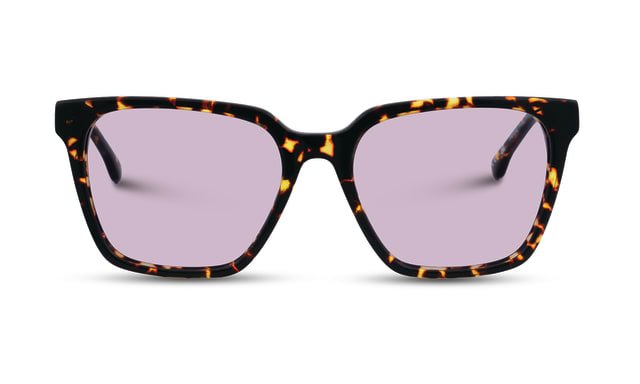
Best for: People who experience bothersome indoor lighting or screen light and want a lens designed for light sensitivity.
What it does: TheraSpecs offers several specialty filters. Its FL-Blend option is based on the family of rose-tinted FL-41 lenses that filter selected wavelengths associated with light discomfort.
Why we like it: The company treats different lighting situations separately and lets shoppers choose among lens types rather than simply labeling everything as blue light blocking.
Good to know: A rose tint changes how colors appear. FL-41 has promising evidence for some forms of light sensitivity, but a product should not be presented as a guaranteed migraine treatment. TheraSpecs also sells other tints, so the lens choice is part of the purchase.
Shop this lens: The TheraSpecs page lets you choose the frame and FL-Blend strength. An Amazon link was supplied but could not be verified as this exact lens, so the official product range is linked here.
Budget FL-41 option: Zenni
Shop Zenni FL-41 frames (affiliate link). Choose a frame and ensure FL-41 is selected in the lens options.
Precision migraine lenses: Avulux Lilu
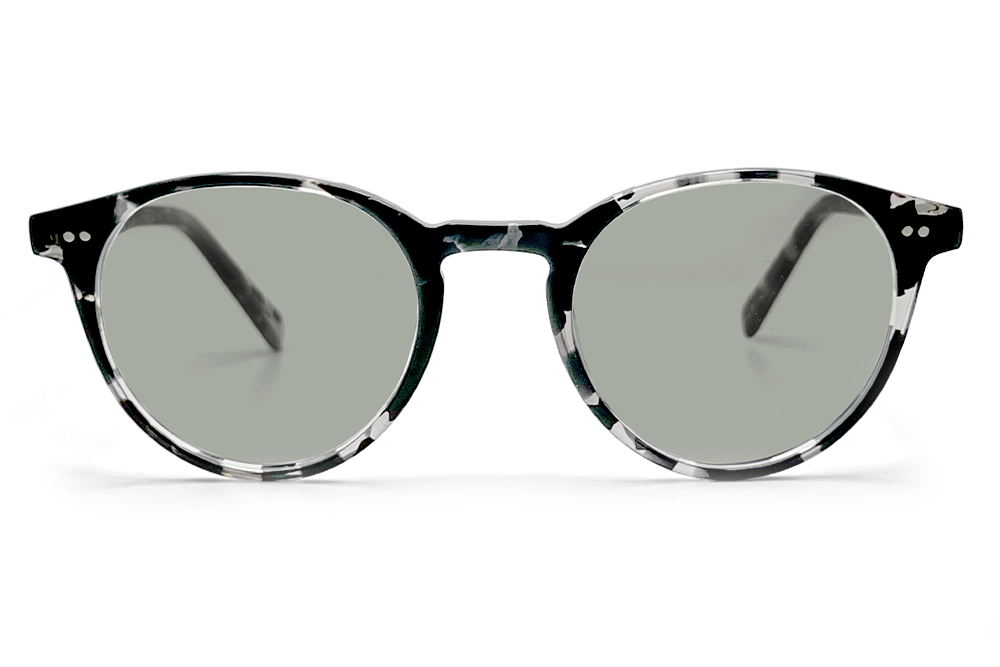
See Avulux Adapt lenses if you move between indoor lighting and bright outdoor light. These photochromic lenses adjust their tint outdoors, and are an alternative to the standard Avulux lenses.
Best for: Someone with diagnosed episodic migraine who finds light sensitivity especially disruptive and is considering a premium specialist lens.
What it does: Avulux lenses filter selected blue-green and red-orange wavelengths while allowing more of the green wavelengths that many people with migraine find comfortable. Unlike traditional rose-tinted FL-41, they have a more neutral appearance.
Why we like it: This is a meaningful innovation in the category. On August 21, 2026, the FDA granted a De Novo classification for Avulux light attenuation lenses for migraine-associated light sensitivity, for use alongside usual migraine care in people aged 12 and older. That is more specific than the broad marketing claims made for ordinary blue-light glasses.
Good to know: The original randomized study did not show a significant difference for its primary outcome. Some later exploratory analyses suggested benefit, but that does not prove the glasses prevent or treat migraine. They are expensive, and their intended use is to reduce the impact of light sensitivity, not replace other migraine care.
A more affordable possibility: Zenni offers FL-41 lens options on selected frames. The exact final price depends on the frame and prescription, and the tint should be verified at checkout. This is an alternative worth investigating rather than a product we have ranked against the two specialist systems above.
The room can help, too. Consider a dimmable lamp instead of harsh overhead illumination, diffuse direct light and watch for glare from windows or shiny surfaces. People differ in which colors and brightness levels feel comfortable. Rather than make a room permanently dark, experiment with lighting you can adjust throughout the day.
My eyes feel tired after computer work
Dryness, blur, headaches and tired eyes are real. But if you blink less while concentrating, focus at the same distance for hours or work with reflections across your screen, a blue-light coating may leave the main problem untouched.

Here is where I would start:
- Reduce glare. Turn your desk so a window does not reflect directly in the screen. Use a shade when sunlight is hitting it.
- Match the light around the monitor. If your screen is very bright in a dark room, a soft nearby or behind-screen light can make the contrast less harsh.
- Give your eyes a different distance to focus on. Every 20 minutes, look about 20 feet away for 20 seconds. Blink fully and deliberately.
- Check what your glasses are designed for. Reading glasses meant for a book may not be ideal for a monitor farther away. A suitable computer-distance prescription and anti-reflective coating can make more difference than a blue-light filter.
More comfortable desk lighting: BenQ ScreenBar Halo 2
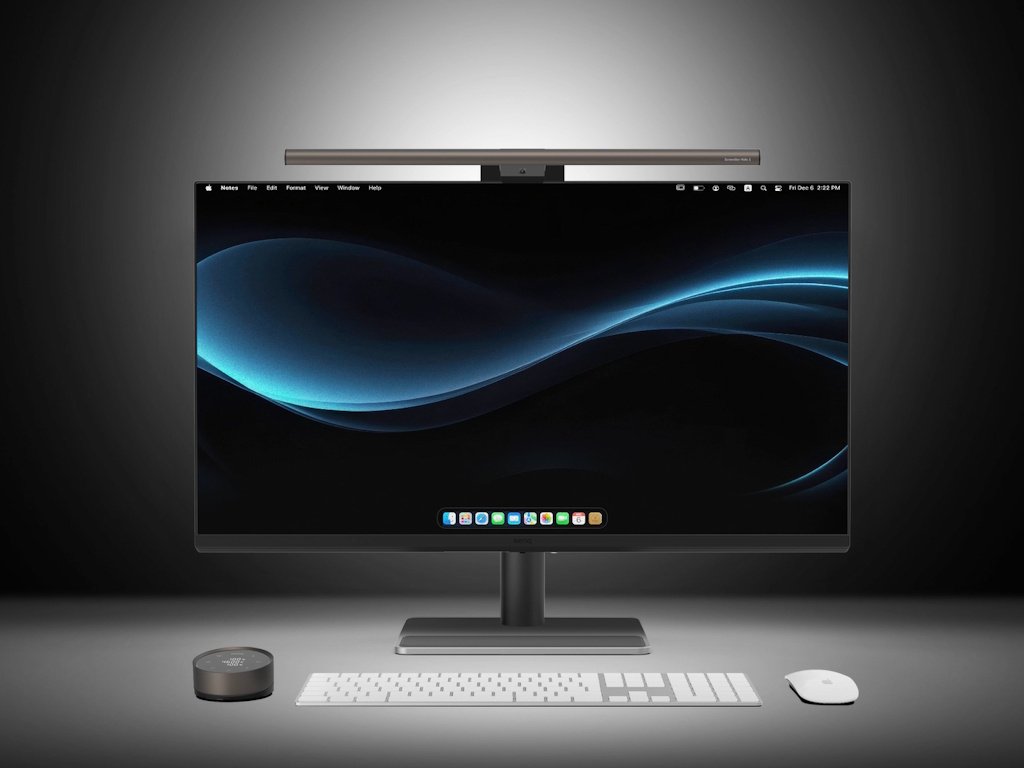
Best for: Someone who works at a computer in a room that gets dim, or who needs light on a desk without reflections across the screen.
What it does: A monitor-mounted light bar directs light onto the desk while backlighting softens the contrast between the bright screen and the surrounding room.
Why we like it: Adjustable brightness and color temperature, a front and rear lighting system, and a compact design that does not take up desk space.
Good to know: It is a premium lighting accessory, not a blue light blocker. Its value comes from better control of room and task lighting. A well-positioned lamp may solve the same problem for less money.
Screen-oriented glasses: GUNNAR Intercept
Best for: Someone who likes a tinted screen-use frame or wants to compare the feel of a computer-focused lens with ordinary glasses.
What it does: The Intercept is sold in different lens configurations, with filtering and anti-reflective features depending on the version selected.
Why we like it: It gives readers a recognizable frame style and a choice of lens tints rather than an anonymous pair with vague promises.
Good to know: The evidence does not establish that filtering blue light, by itself, improves ordinary digital eye strain. Any comfort benefit may relate to glare, lens optics, tint preferences or an appropriate prescription. Verify the exact Intercept lens before recommending a specific version.
A screen filter instead of glasses: Ocushield
Best for: Someone who would rather put a filter on a device than wear another pair of glasses.
What it does: Ocushield makes screen filters and protectors for certain devices to alter the light coming through the display.
Why we like it: It is an option for people who find tinted glasses inconvenient.
Good to know: Buy the exact filter that fits your device. Like glasses, a screen filter is not proven to prevent retinal damage or reliably solve computer-related dryness. Adjusting screen brightness and glare may be enough.
Can blue light from screens damage my eyes?
This is where product marketing has gotten ahead of the evidence. Ordinary use of phones, tablets and computer screens has not been shown to cause the kind of permanent retinal damage sometimes claimed in advertisements for blue-light glasses. We should not sell glasses as protection against macular degeneration when that benefit has not been established.
What is real is that hours of screen use can leave your eyes dry, blurry or uncomfortable. And evening light can influence your body clock. Those deserve good solutions, but they are different concerns.

Newer ways to manage lighting and screen comfort
Glasses are only one way to change the light you experience. A few newer products take different approaches. They are interesting options, although their specific health benefits are not all established.
A monitor that uses room light: Eazeye Radiant Monitor 2
See the exact Radiant Monitor 2 (non-affiliate).
Good to know: At $789 it is an expensive specialist screen. Product-specific clinical evidence for reducing eye strain is lacking, and its display behavior will not suit everyone.
What it does: This 15.6-inch transflective display uses surrounding light to illuminate the screen, switching to a backlight when necessary.
Best for: People looking for a portable, daylight-readable screen rather than another pair of glasses.
A different approach to migraine-sensitive lighting: MyGreen Lamp
See the exact MyGreen Lamp (non-affiliate).
Good to know: Early studies of green light do not prove that this specific lamp prevents or treats migraines. At $349 it is a significant purchase and remains an emerging option rather than a first recommendation.
What it does: This portable lamp has adjustable 530 nm and 545 nm green LEDs. Green light may feel more tolerable than other colors for some people with migraine.
Best for: Readers curious about emerging narrowband green light technology.
Adjustable bedroom lighting: Philips Hue Twilight
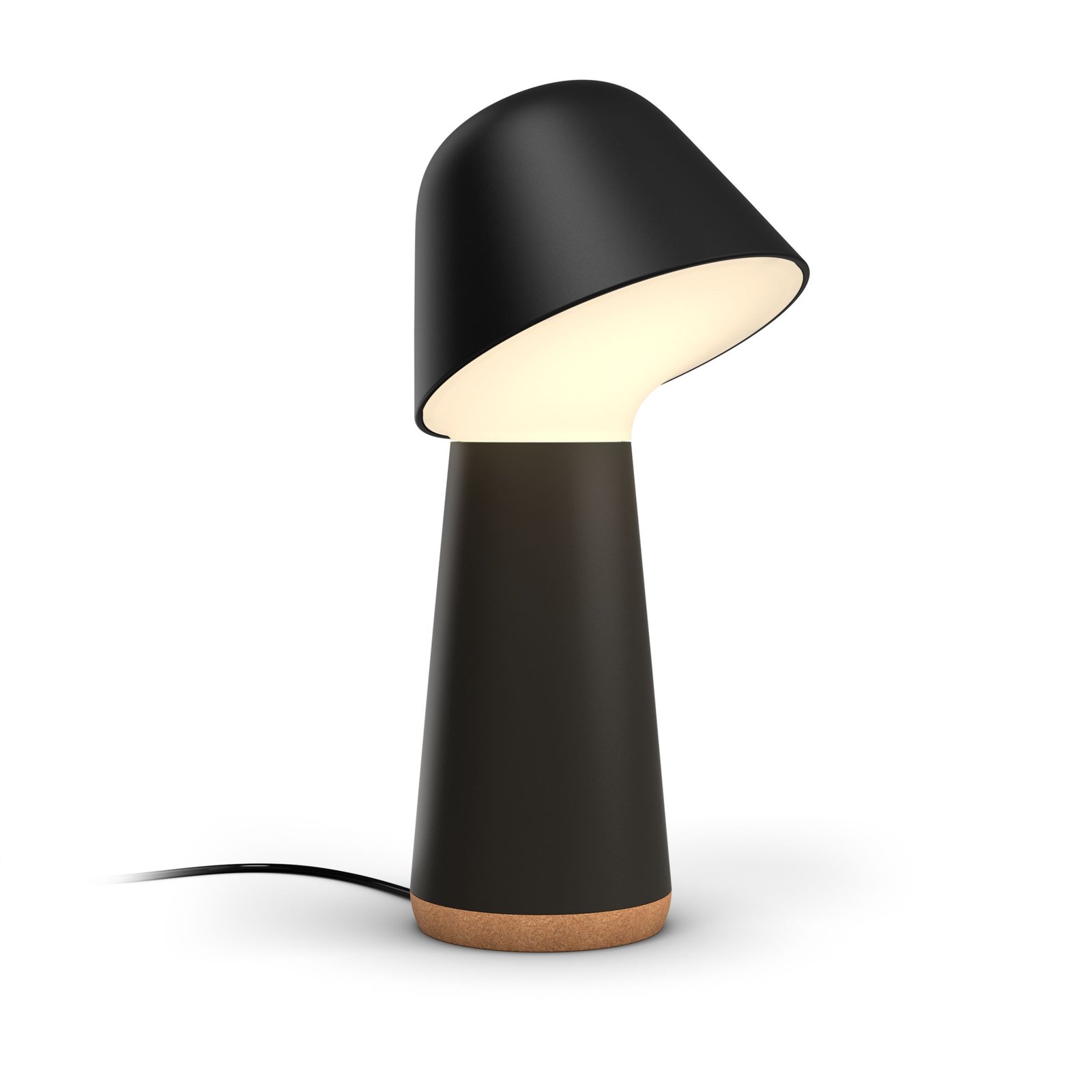
Shop Philips Hue Twilight at Wayfair (affiliate link). Confirm the listing is the Twilight sleep and wake-up light, not a different Hue bedside lamp, before purchase.
Good to know: It requires power and works best for someone who wants programmable lighting. It is not a medical sleep treatment.
What it does: This lamp offers warm evening light and scheduled sunset and wake-up lighting. It changes the room around you rather than putting a filter in front of your eyes.
Best for: A bedside light that can gradually dim at night and brighten in the morning.