
How to light every room so it looks better, works harder, and lets you wind down at night
Most spaces are lit by one fixture in the middle of the ceiling. You walk in, flip the switch, and the room goes flat. People blame the paint. They blame the furniture. They buy a rug.
It’s usually the lighting — and it’s usually the same problem. One overhead source has to cover everything: cooking, reading, working, eating, homework, winding down at 10pm. It can’t. So it does all of it badly. It flattens the room, drops shadows onto the exact surfaces you’re trying to see, and puts bright light above your eye line at the hour your body is trying to switch off.
Lighting is the cheapest thing to change in a home and the thing most people never touch. It changes how a room looks, how food looks, how you look in the mirror, how easily you focus, and how well you sleep. Here’s how to get it right, room by room.
Start here: the three layers
Every room needs at least three sources of light at three different heights.
- Overhead. Ceiling fixture, recessed lights, chandelier. This is your general fill. (Ambient lighting)
- Eye level. Table lamps and wall sconces. This is the layer almost everyone is missing, and it is the one that makes a room feel warm rather than lit. (Task lighiting).
- Low. Floor lamps, under-cabinet strips, uplights. This is what makes a room feel like evening. (Accent lighting).
Two rules that apply everywhere:
- Light the objects, not the floor. Aim light at walls, art, plants and corners instead of straight down into the middle of the room. Light bouncing off a surface is softer, and lit walls make a room read taller and wider. A room lit only from the center looks like an office.
- Spread the sources out. Place them in a rough triangle across the room rather than clustered on one side. Uneven pools of light across a space are what remove the flat feeling.
The four numbers on the bulb box
These four things decide whether a room feels good. They matter more than the fixture you choose.
1. Kelvin (K). The color of the light. This is the most important one and the one most people get wrong.
- 2700K. Warm and golden. My default for living rooms, bedrooms, dining rooms and hallways.
- 3000K. Slightly crisper and cleaner. Best for kitchens, bathrooms, laundry and closets.
- 4000K and above. Cool and slightly blue. Suitable for garages, workshops and home gyms only.
- 5000K, sold as “daylight.” Sold everywhere, belongs almost nowhere in a home.
- 2200K to 2400K. Amber, close to candlelight. My favorite for bedside lamps and night lights.
The fastest upgrade in any house: walk through one room and make every bulb in it the same Kelvin. Mismatched color temperature is the reason a room can be perfectly bright and still feel wrong. It takes twenty minutes and costs almost nothing.
2. Lumens. The brightness. Watts no longer tell you anything useful. Rough targets:
- Table lamp: 400 to 800 lumens
- Floor lamp: 800 to 1,600 lumens
- Recessed can: 600 to 800 lumens
- Under-cabinet: 200 to 300 lumens per foot of counter
3. CRI. How accurately the light shows color. Look for 90 or higher. Below 80, wood turns grey, food looks dull and skin looks tired in the mirror. If the box lists R9, higher is better. R9 is the red channel, and a low one is why some bathrooms make everybody look unwell.
4. Dimmable. Worth insisting on in every room you use at night. One thing to know: LED bulbs need an LED-rated dimmer. If your lights buzz or flicker when you dim them, the dimmer is usually the problem, not the bulb.
A test worth doing: open your phone camera and point it at a lit bulb. If you see rolling bars or banding on the screen, that bulb is flickering. You may not consciously notice it, but flicker is associated with eye strain and headaches. Inexpensive LEDs are the usual cause.
Why lighting is a health decision, not just a design one
Your body reads light as a clock.
Bright, cool light signals daytime. Dim, warm light signals night. Most homes send the opposite signal: dim all day, then bright overhead light at 9pm.
In 2022 a group of sleep and circadian researchers published agreed-upon targets in PLOS Biology. In practical terms:
- During the day, go bright. Daylight first. Open the blinds before you reach for a switch.
- In the three hours before bed, go dim and warm. Lamps on, overheads off.
- While you sleep, make it as dark as you can.
That last one is not fussiness. A Northwestern study had healthy adults sleep one night in a moderately lit room and one night in a dim one. After a single night in the lit room, participants had higher overnight heart rates and more insulin resistance the next morning. Larger population studies since have linked brighter sleeping environments to higher cardiovascular risk.
The most useful rule in this whole guide: after dark, keep the light below your eye line. Lamps, sconces, under-cabinet strips. Anything above eye level at night is working against your body clock. It is also the reason a good hotel room or restaurant feels calm. They light the table, not the ceiling.
Room to Room Lighting guide
Also, check out some unique & gorgeous designer selected lighting pieces on Amazon.
Entry & Foyer
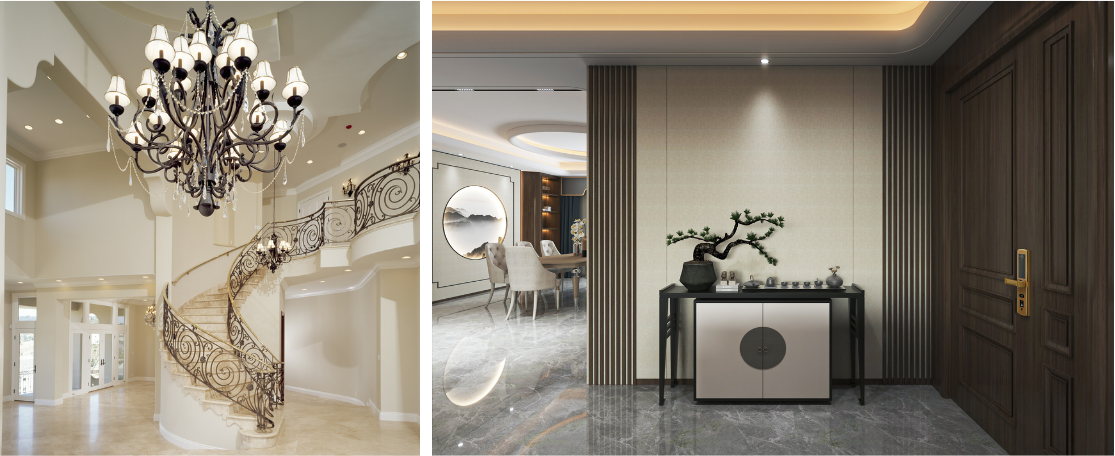
The first impression, and usually a room you pass through rather than sit in.
- Hang the fixture so the bottom clears 7 feet from the floor. Below that, tall guests knock into it.
- If there is a window above the door, center the fixture in the window as seen from outside. This is a small detail that makes a house look properly designed from the street.
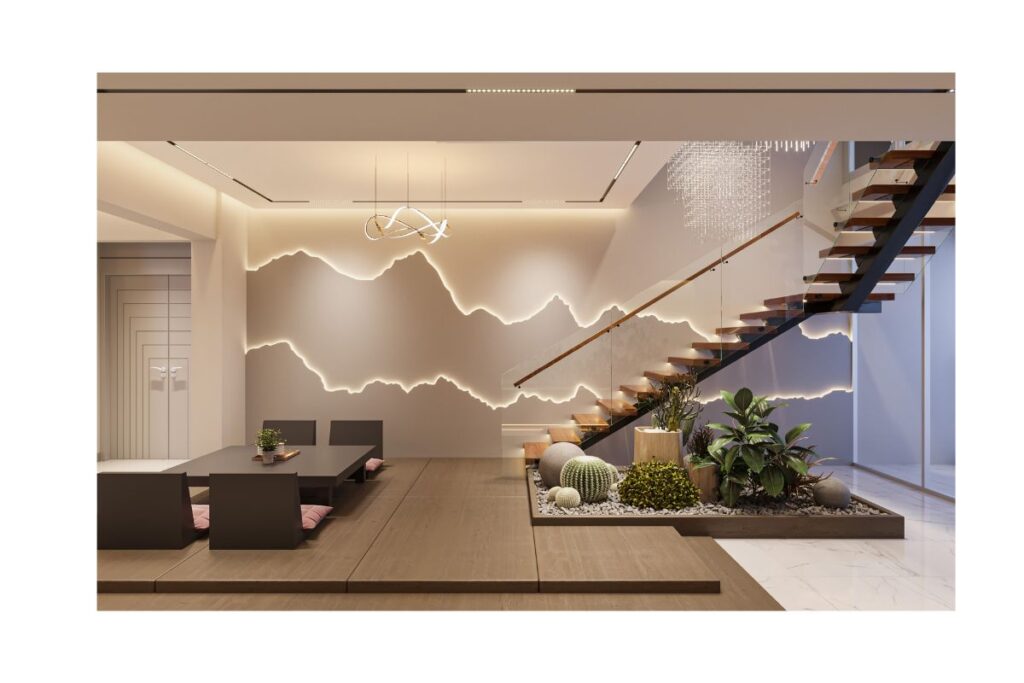
- In a two-story entry, hang the fixture in the middle of the vertical space, not tight to the ceiling. A fixture pushed to the top makes the space feel empty underneath.
- Add a lamp on the console table. The overhead alone gives you a bright spot and dark edges. A lamp at eye level fills the corners and gives you something soft to switch on at night instead of the main light.
Living Room
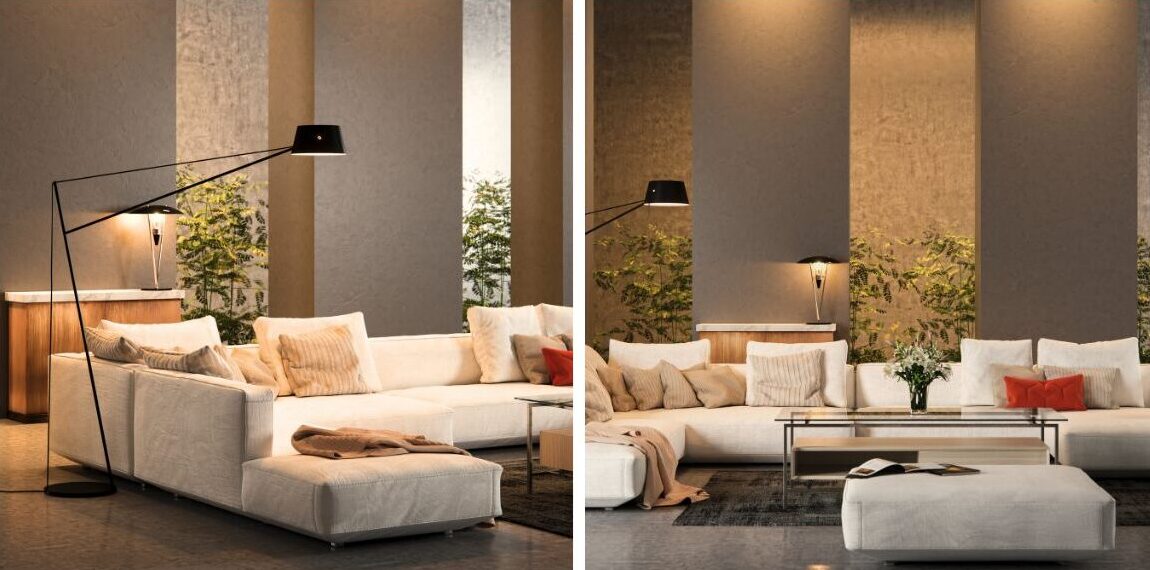
The hardest-working room in the house and usually the worst lit. It handles reading, TV, conversation, homework and winding down.
- Aim for five sources of light, spread across the room. Floor lamp beside the sofa, table lamp at the opposite end, something low on a console or bookshelf, a sconce or picture light on a wall, and the overhead. Five sounds like a lot until you compare it to a room with two.
- If you have no ceiling fixture, you do not need one. Many living rooms only have a switched outlet. Build the ambient layer out of lamps instead. A torchiere or an uplight in a corner bounces light off the ceiling and fills the room as well as a fixture would.
- Choose shades on purpose. Linen, paper and fabric shades let light through the sides and read as ambient. Solid metal or dark shades throw a tight pool downward and read as task lighting. A good room has both.
- Get the lamp height right. Sitting on the sofa, you should not be able to see the bulb. The bottom of the shade wants to land at roughly seated eye level, which on a standard 24 to 26 inch side table means a lamp about 26 to 30 inches tall. A visible bulb is glare, and glare is why some beautifully decorated rooms still feel harsh.
- For recessed lights, use 4 inch cans rather than 6 inch, space them about half your ceiling height apart (roughly 4 feet on an 8 foot ceiling), and pull the perimeter ones 2 to 3 feet off the wall so they wash the wall and the art instead of pooling on the floor.
- Put the lamps on one switch. Smart plugs, a smart bulb group, or switched outlets. If turning on five lamps means walking a lap around the room, you will use the overhead instead, and the layers you installed will sit unused.
- Light the darkest corner before you add anything else. The eye reads dark corners as a small room, so filling them is the quickest way to make a space feel larger. An uplight on the floor behind a plant also casts leaf shadows on the ceiling, which is an inexpensive way to add depth.
- If there is a TV, keep a low warm light behind or beside the screen and nothing in front of it. A lamp facing the TV puts a reflection in the middle of the picture. A bright screen in a fully dark room is a common cause of eye strain.
- Aim for five sources of light, spread across the room. Floor lamp beside the sofa, table lamp at the opposite end, something low on a console or bookshelf, a sconce or picture light on a wall, and the overhead. Five sounds like a lot until you compare it to a room with two.
Kitchen
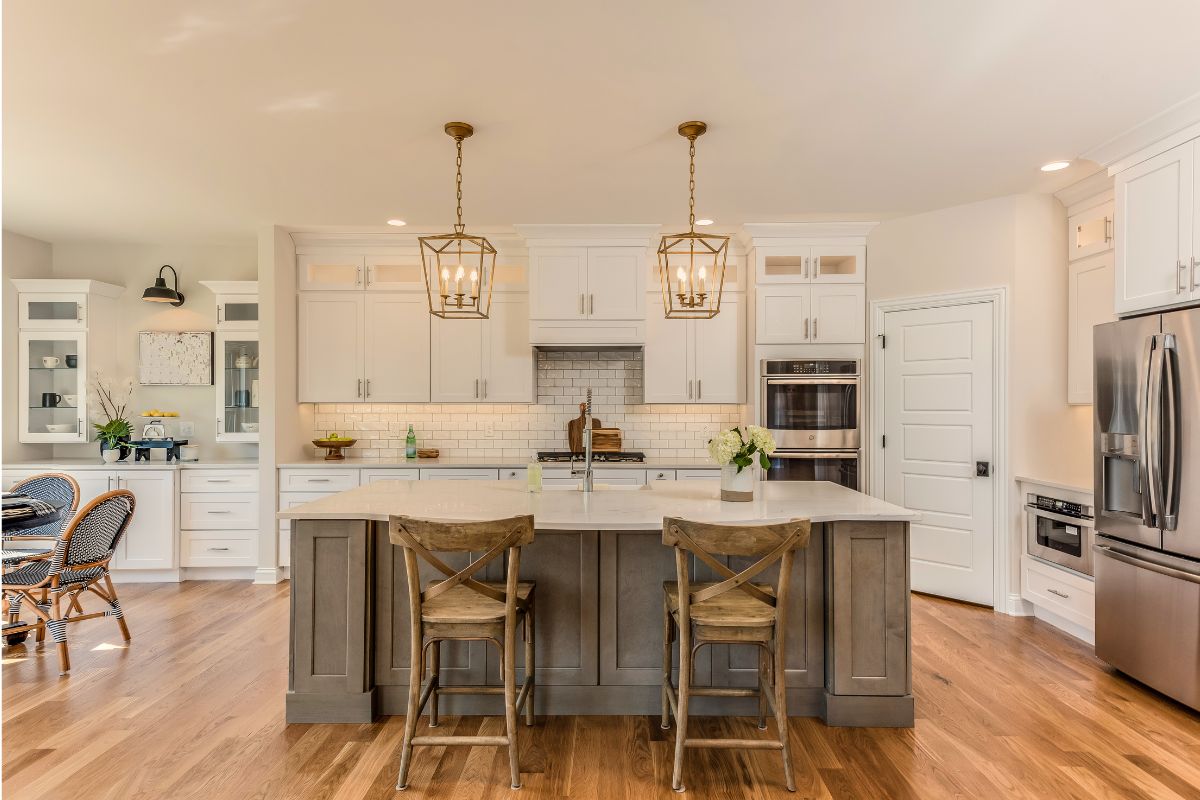
The room with the most task lighting and the most shadow problems.
- Install under-cabinet lighting. This is the highest-return lighting upgrade in the entire house. Without it you stand between the ceiling light and the counter and work in your own shadow.
- Mount the strip toward the front edge of the cabinet, not the back. Mounted at the back it lights the backsplash and leaves the working surface dim.
- Put it on its own switch. Under-cabinet light on its own makes an excellent low-level night light for the kitchen after dark.
- Hang island pendants 30 to 36 inches above the countertop, about 30 inches apart, and at least 6 inches in from each end of the island.
- Use 3000K and CRI 90 or higher in here. Food needs accurate color. A low-CRI bulb makes fresh produce and raw meat genuinely hard to judge.
- Add a small lamp on the counter if you have room. A single warm lamp lets you be in the kitchen in the evening without turning on the full overhead grid.
Bedroom
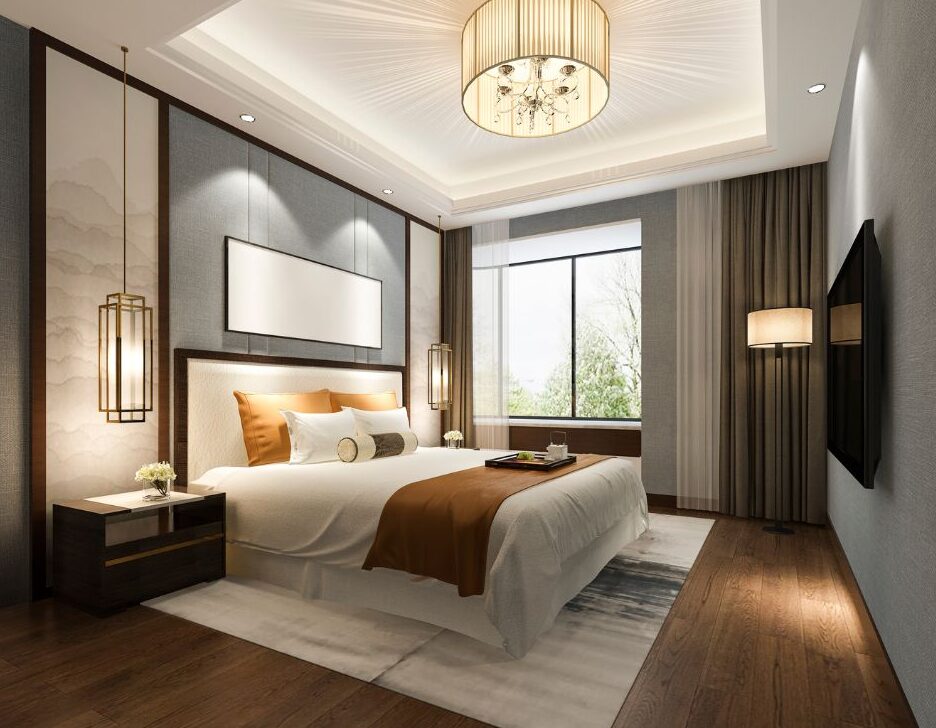
The room where lighting stops being decoration and starts affecting your health.
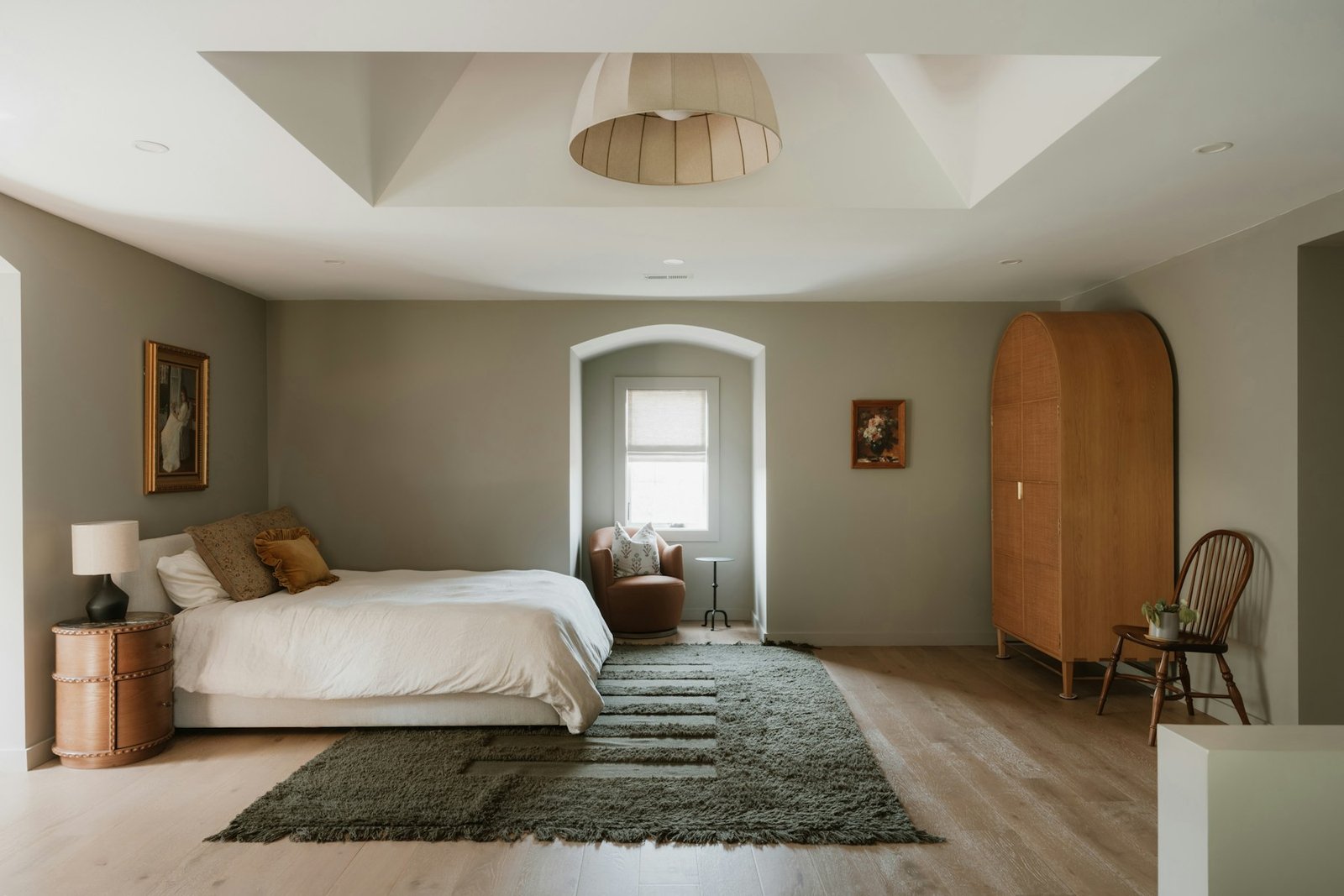
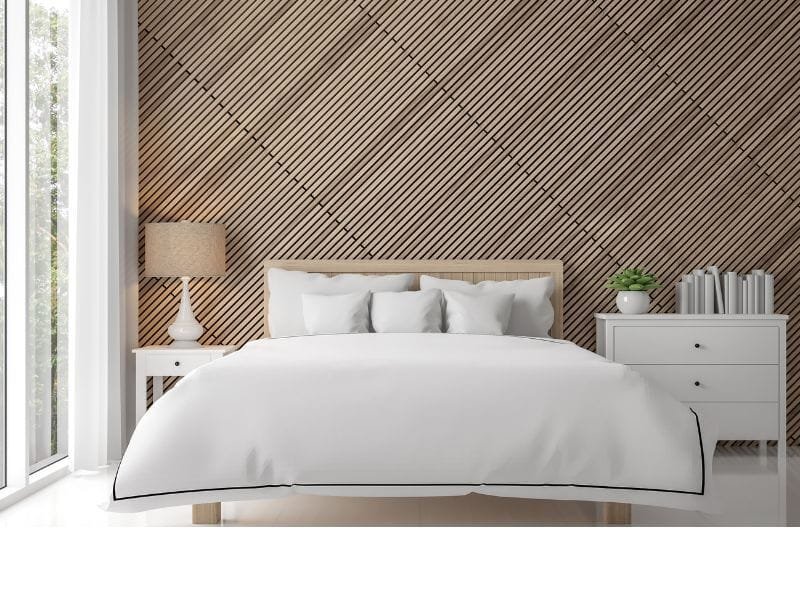
- Use 2200K to 2700K at the bedside, on a dimmer or a three-way bulb. Warm, low light in the evening supports the wind-down your body is already trying to do.
- Consider sconces or pendants beside the bed instead of table lamps. They free the nightstand entirely. Hang pendants about 28 to 30 inches above the top of the mattress.
- Turn the overhead off after dark, or dim it low. This is the single most effective change in the room.
- Deal with the small lights. Walk the room at night and look for charger LEDs, TV standby dots and speaker glow. Tape over them. This is free and it addresses the exact kind of low-level light the sleep research is concerned with.
- Add blackout where you can. Blackout curtains, or a well-fitted shade.
- Use 2200K to 2700K at the bedside, on a dimmer or a three-way bulb. Warm, low light in the evening supports the wind-down your body is already trying to do.
If you need to move around at night, use an amber or red plug-in night light near the floor. Low and warm gives you enough to see by without waking you fully. Cool white night lights are the worst option available.
Home Office
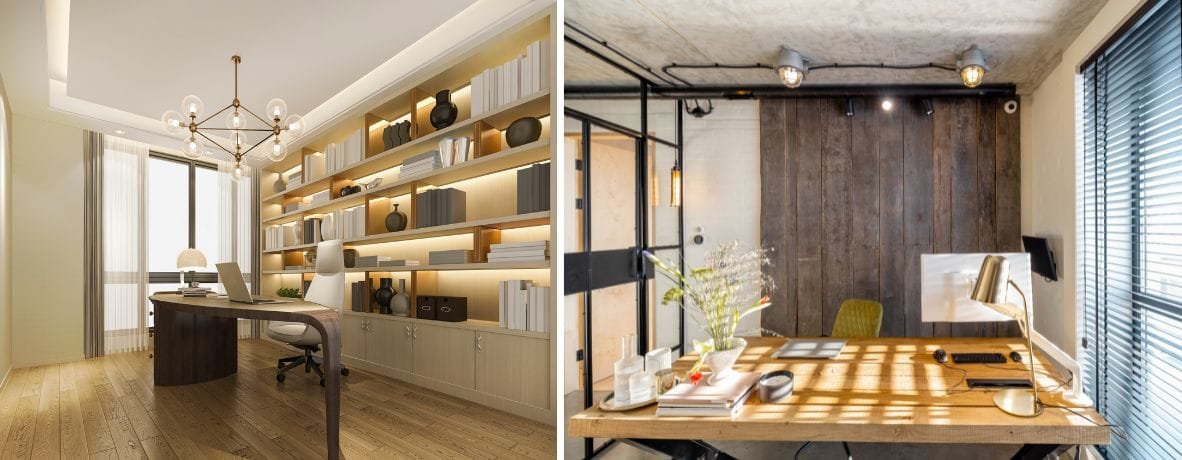
The room where lighting has the most direct effect on how you feel by the end of the day.
- Light from the side, never from behind you. A window or lamp behind your head reflects off the screen. A window or lamp directly in front of you creates glare.
- Use an adjustable desk lamp positioned opposite your writing hand, so your hand does not cast a shadow on what you are doing.
- Add bias lighting. Place a small warm light behind your monitor, aimed at the wall. It reduces the contrast between a bright screen and a dark wall, which is one of the most effective and least expensive fixes for tired eyes.
- During the day, brighter and cooler is appropriate here. Sit near a window if you can. Daylight is the best source and it is free.
- Put the bright layer on its own switch and dim it in the evening. If you work late, you want to be able to drop the room down to warm lamplight without losing the ability to see.
- Light from the side, never from behind you. A window or lamp behind your head reflects off the screen. A window or lamp directly in front of you creates glare.
Bathroom
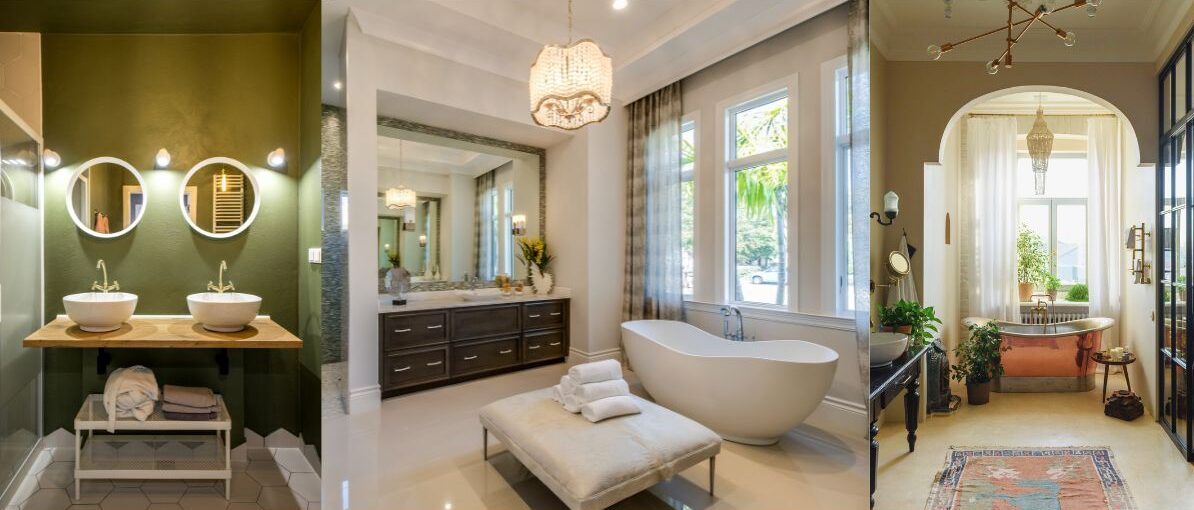
The most commonly mis-lit room in the house, and the easiest to fix.
- Light your face from the sides, not from above. A single bar above the mirror casts shadows into your eye sockets and under your chin. Side lighting is why professional mirrors have bulbs down both edges.
- Mount flanking sconces with the bulbs at roughly 60 to 65 inches from the floor, which is about eye level standing.
- If a bar above the mirror is your only option, center it 75 to 80 inches from the floor and choose a frosted or diffused shade rather than exposed bulbs.
- Use 3000K and CRI 90 or higher. This is where you assess your own skin, so color accuracy is worth paying for.
- Check the rating. Fixtures near a shower or tub need to be damp-rated or wet-rated. This is a safety requirement, not a preference.
- Add a low amber night light near the floor. A 3am trip under a full vanity light will wake you all the way up and make it harder to fall back asleep.
- Light your face from the sides, not from above. A single bar above the mirror casts shadows into your eye sockets and under your chin. Side lighting is why professional mirrors have bulbs down both edges.
Dining Room
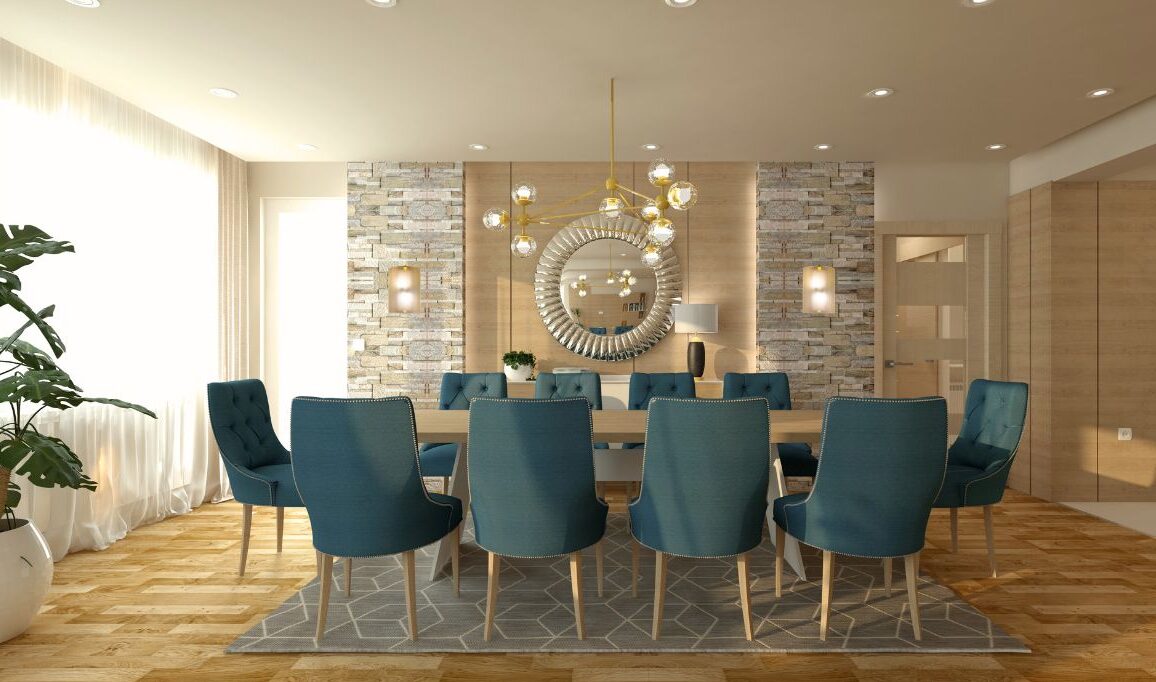
One of the few rooms where the light fixture is the main design element.
- Hang the chandelier so the bottom sits 30 to 36 inches above the tabletop on an 8 foot ceiling. Add about 3 inches for every additional foot of ceiling height.
- Size it to half or two thirds the width of the table. Never wider than the table itself.
- Check it seated, not standing. If you cannot see the person across from you, it is hanging too low or it is too wide.
- A dimmer matters more here than anywhere else. The same room needs bright light for homework at 4pm and low light for dinner at 7pm.
- Add a second layer at the walls. Sconces, buffet lamps or a picture light. A chandelier alone lights the table and leaves the rest of the room dark, which makes the space feel smaller than it is.
Game Room Or Media Room
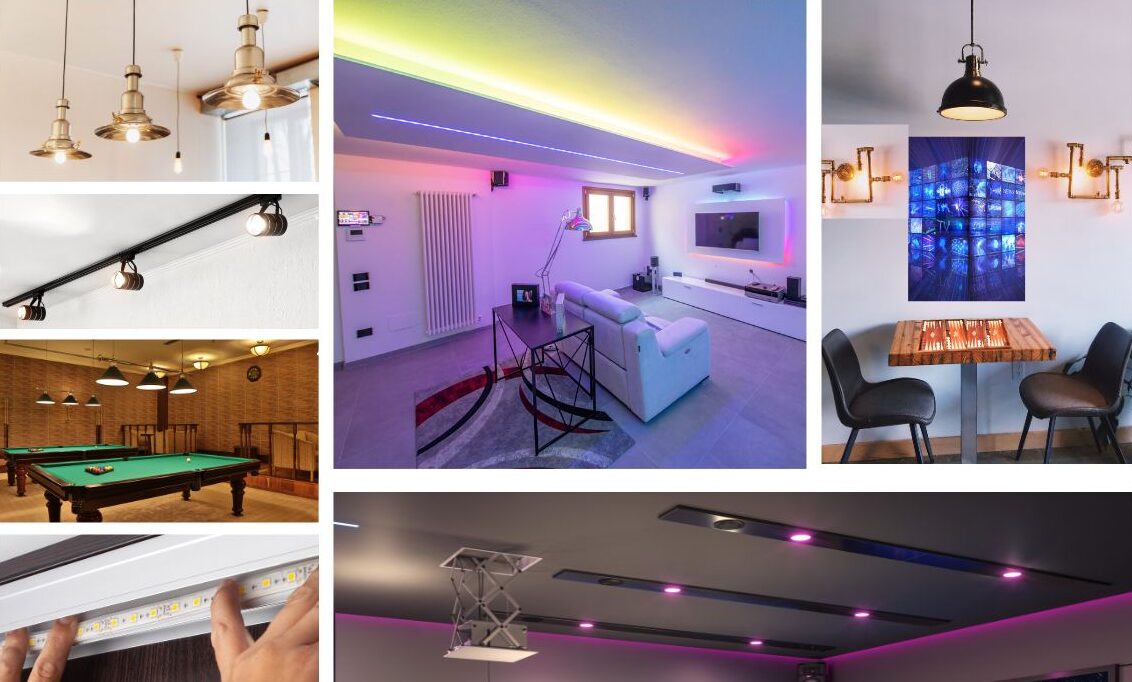
Built around a screen, so everything else works around that.
- Add bias lighting behind the screen. A warm light behind the TV or monitor, aimed at the wall, reduces the contrast that causes eye strain during long sessions. Keep it warm rather than blue, especially at night.
- Keep every source below eye level while you are watching, and none of them facing the screen.
- Put everything on dimmers. This room swings between board games at full brightness and films in near dark.
- Add one task lamp for cards, boards and controllers, so you are not lighting the whole room for a small activity.
- If you use color-changing strips, use them as accent light only. They are not a substitute for a task or ambient layer, and saturated color at night carries the same wind-down issue as bright white.
- Add bias lighting behind the screen. A warm light behind the TV or monitor, aimed at the wall, reduces the contrast that causes eye strain during long sessions. Keep it warm rather than blue, especially at night.
Nursery
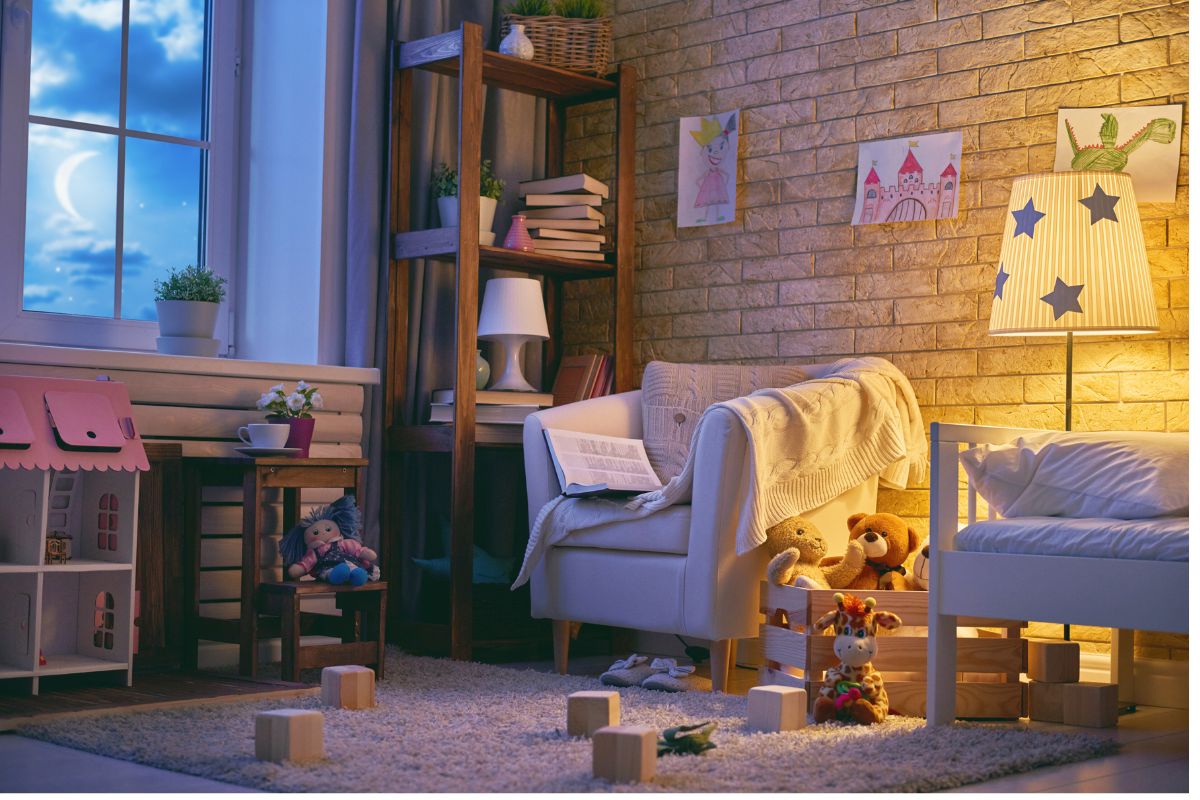
Everything in here should serve sleep, including the light.
- Nothing above 2700K anywhere in the room. No cool-white bulbs and no blue-white plug-ins.
- Put the overhead on a dimmer. Night feedings and changes should happen in the lowest light you can manage without stumbling. Bright overhead light at 2am wakes both of you fully and makes settling back down harder.
- Use an amber night light at floor level. Low placement keeps it out of the baby’s line of sight.
- Add a floor lamp or reading lamp in the feeding chair corner. You want a soft pool of light there, not the whole room lit.
- Keep the room dark for sleep. Blackout shades matter here for the same reasons they matter in your own room.
- Nothing above 2700K anywhere in the room. No cool-white bulbs and no blue-white plug-ins.
Home Library Or Reading Nook
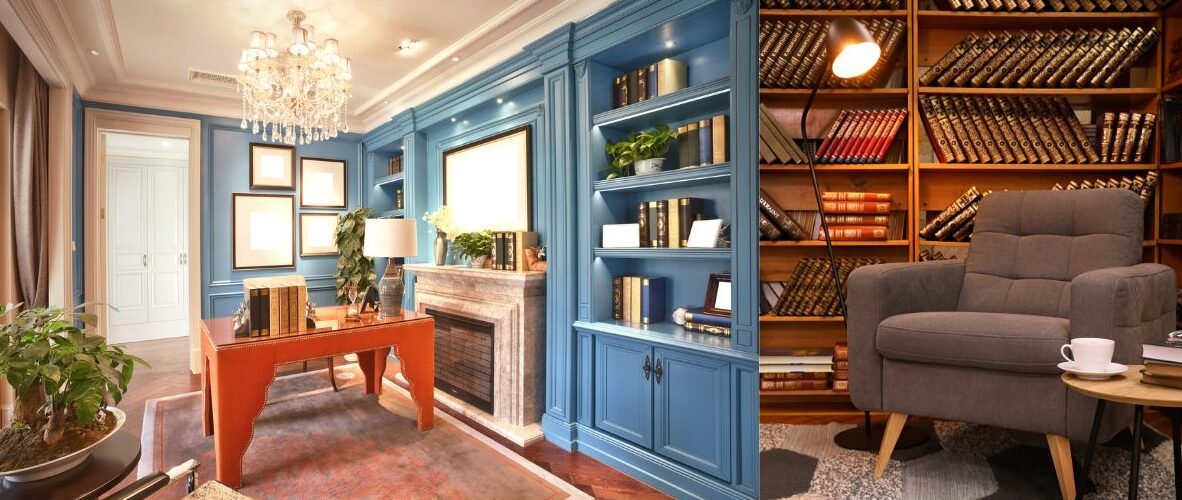
Reading needs light on the page, not light in the room.
- Position the reading lamp so light comes over your shoulder onto the page, not from in front of you into your eyes.
- Use adjustable sconces or picture lights on the shelves. Lighting the spines makes books look like a collection rather than storage, and it lights the wall, which opens up the room.
- Add warm strip lighting inside cabinets or shelves if you have glass fronts or open shelving. It gives depth to a wall of books.
- Aim for a dim room with one bright pool at the chair, rather than an evenly bright room. Contrast is what makes a reading corner feel like one.
- Position the reading lamp so light comes over your shoulder onto the page, not from in front of you into your eyes.
Home Gym
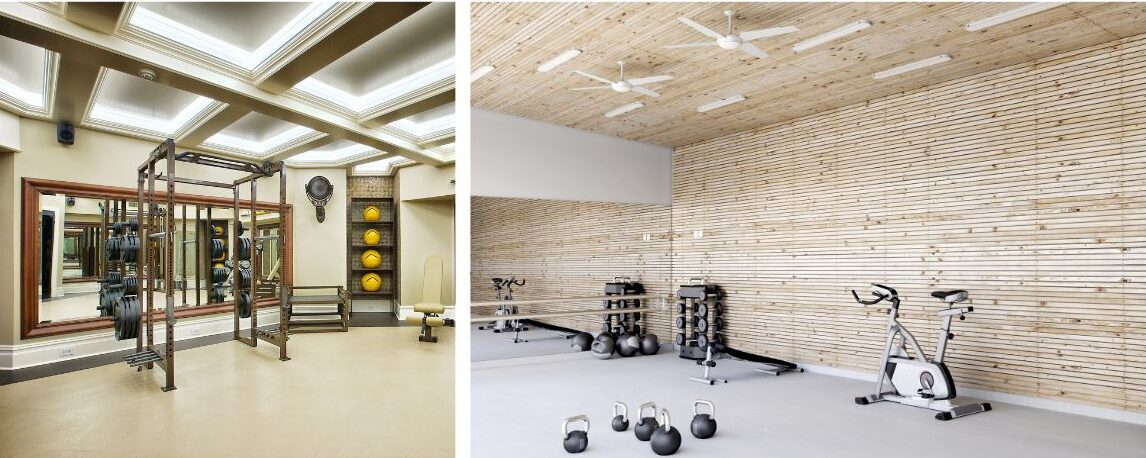
The one room where cool, bright light is genuinely the right answer.
- Use 4000K and bright, even coverage. LED panels or well-spaced recessed lights. Cool bright light supports alertness and perceived effort, which is exactly what you want mid-workout.
- Light the floor evenly and avoid single overhead sources. One central light means you train in your own shadow and cannot see your form.
- Put the bright layer on its own switch and add a warm secondary layer for stretching and cooldown.
- If you train in the evening, be aware of the tradeoff. Bright cool light in the last hour before bed works against sleep. Use the warm layer once you are done.
- Light the storage area properly so you can actually find equipment.
- Use 4000K and bright, even coverage. LED panels or well-spaced recessed lights. Cool bright light supports alertness and perceived effort, which is exactly what you want mid-workout.
Point Of Alignment
Designers use these creative ideas to bring character and personality to their lighting designs. The key is to experiment, be imaginative, and have fun with your lighting choices to add some pizzazz through the layered lighting technique. In addition to adding functionality, it gives your home a luxurious designer look. So feel free to be creative and personalize the lighting design based on your own style and preferences!