
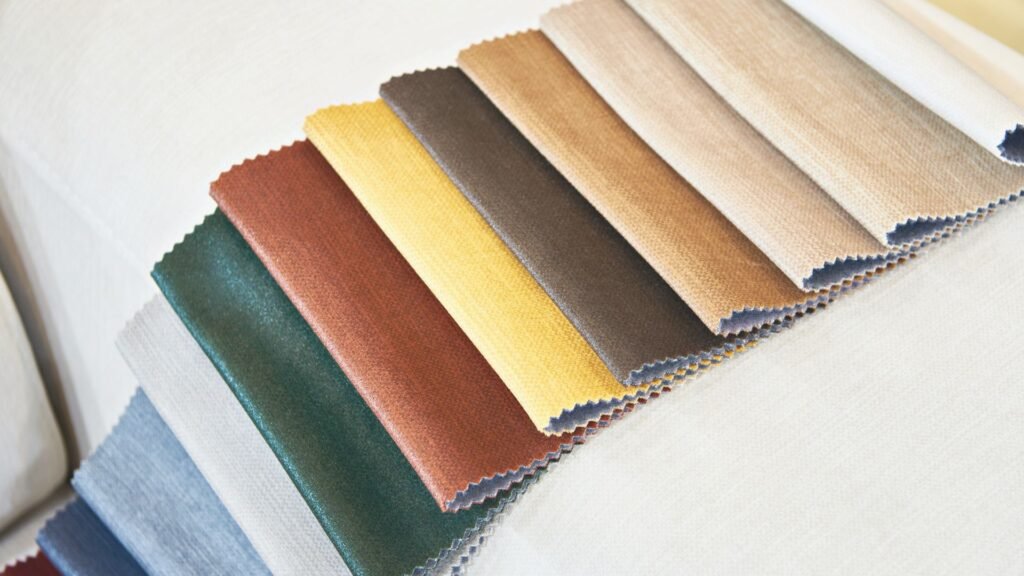

What “stain-resistant” upholstery really means, how it affects your indoor environment, and what to look for instead.
what’s natural, what’s plastic, & what to choose.
FABRIC GUIDE
NATURAL (best everyday choices):
•Linen
• Cotton (organic if possible)
• Wool
• Hemp
• Blends of the above
PLANT-BASED BUT PROCESSED :
• TENCEL / Lyocell → best in this category
• Modal
• Rayon / Viscose (including “bamboo”)
SYNTHETICS (from better → worse):
• Polyester (PET) → most common, more stable option
• Nylon (Polyamide) → very durable, still plastic
• Olefin (Polypropylene) → lower cost, less breathable
• Acrylic → tends to pill, hold heat, lower quality feel
IF BUYING SYNTHETICS, LOOK FOR:
• PFAS-free (no stain/water coatings)
• Solution-dyed fabrics (color built in, fewer surface treatments)
• OEKO-TEX Standard 100 or GREENGUARD Gold
AVOID (or limit):
• “Stain-resistant” / “performance” with no transparency
• PFAS-treated fabrics
• Vinyl / PVC
• Polyurethane (PU) coated fabrics
• Faux leather (usually plastic + coatings)
FOR NATURAL FABRICS:
• Look for GOTS (organic certification)
What “Performance Fabric” Actually Means
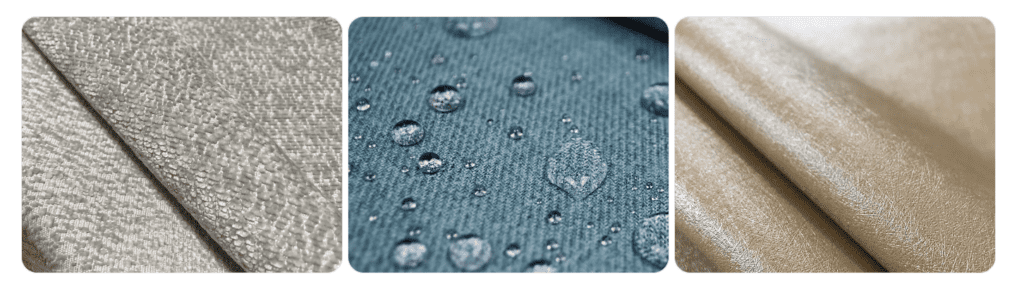
Most “performance fabrics” are synthetic (polyester, nylon — petroleum-based) with added finishes like stain repellents (often PFAS), water resistance, and wrinkle treatments.
That slick or slightly shiny feel is usually a coating — not the fabric itself.
These finishes are designed to make fabrics easier to clean, but they also add an extra layer of processing most people aren’t aware of.
What Happens to These Fabrics Over Time
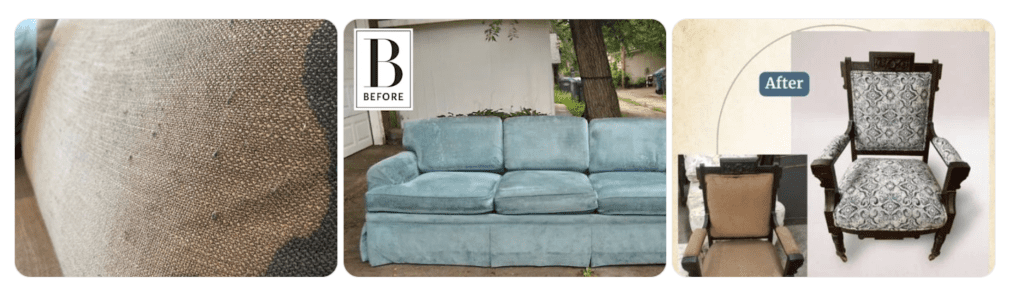
The issue is these finishes don’t stay intact.
With regular use — sitting, body heat, movement, and cleaning — they gradually wear down.
As that happens, fabrics can:
• release low levels of VOCs, especially when new
• shed microfibers (microplastics) into indoor dust
• lose their coated feel and break down unevenly
This isn’t immediate but gradual and happens with everyday use.
Why This Matters for Your Health and Comfort
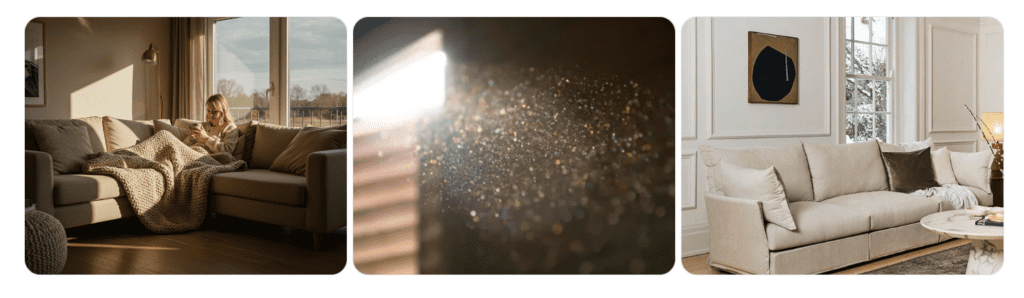
It’s not one big exposure — it’s repeated, daily contact in your closest environment.
Over time, that can:
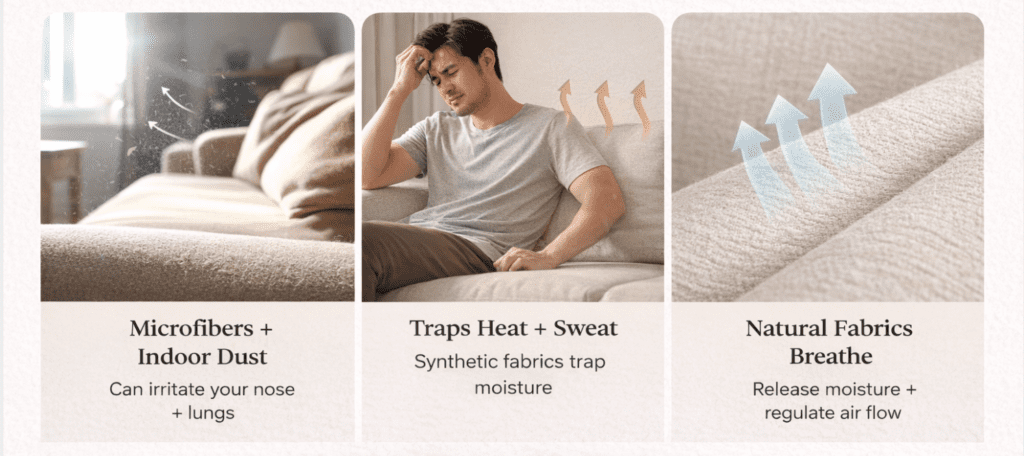
• irritate your nose and lungs, especially if you’re sensitive or have asthma
• add to indoor dust as microfibers settle into your space
• make seating feel hotter, less breathable, and less comfortable
Synthetic fabrics don’t regulate moisture well, so they tend to:
- trap heat
- hold sweat
- feel less comfortable over long periods
Natural materials behave differently — they breathe, absorb, and release moisture.
You feel that difference.
How to Choose Better Upholstery (Without Overcomplicating It)
If you want to be more informed when choosing upholstery:
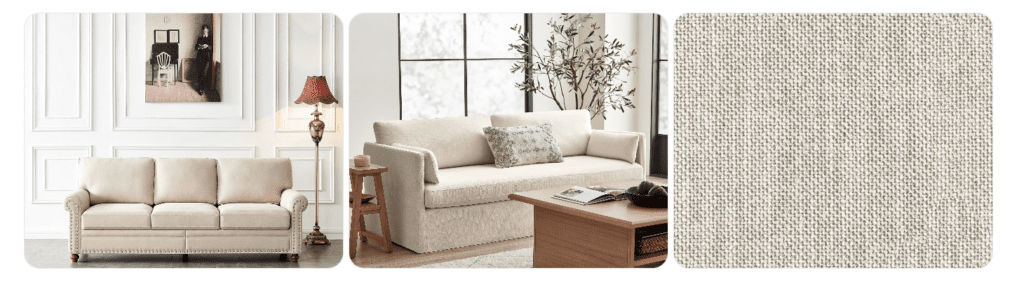
• Go for removable, washable covers
• Choose tighter weaves (they naturally slow spills)
• Pick materials that wear in well instead of relying on coatings
Choose materials that age naturally without heavy surface treatments.
Labels That Actually Mean Something
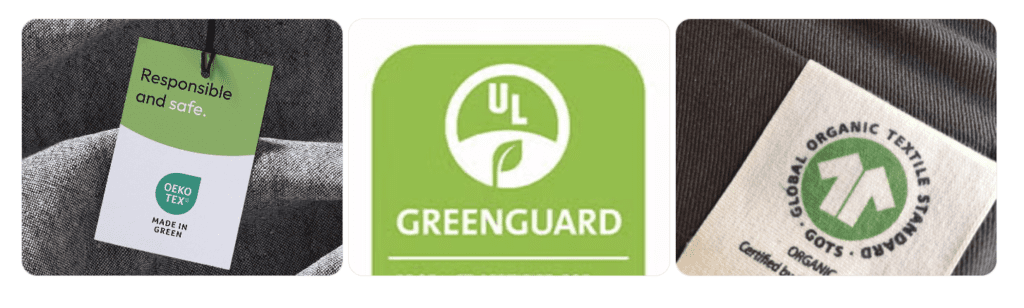
Look for these when possible:
- OEKO-TEX Standard 100 → tested for harmful substances
- GREENGUARD Gold → low emissions for indoor air
- GOTS → organic textile certification
Point Of Alignment:
A Simple Way to Tell What You’re Looking At
• Slick or shiny → usually coated
• Matte and textured → usually lower processing
We don’t really think about fabrics this way. We buy what looks good, feels soft, and works in our space. But these are the surfaces we’re in contact with every single day. Over time, that exposure adds up. Once you understand that, you don’t need to change everything. You just start paying attention and making better choices where it makes sense.
Frequently Asked Questions About Upholstery & Fabrics
Is synthetic upholstery bad for you?
Synthetic upholstery is not always harmful, but it can trap heat, shed microfibers, and contain chemical treatments. Over time, daily contact adds up, especially with furniture you use often like sofas and chairs.
Are performance fabrics safe?
Performance fabrics are designed to resist stains, but many use coatings or treatments to achieve that. Some are safer than others, so it helps to look for low-emission or certified options rather than relying on the label alone.
Do couches release microplastics?
Yes. Synthetic fabrics can shed microfibers over time, especially with friction and regular use. These particles can settle into dust and become part of your indoor environment.
What is the safest fabric for upholstery?
Natural fabrics like linen, cotton, wool, and hemp are generally safer options. They tend to breathe better, regulate moisture, and do not release microplastics the way synthetic materials can.
What certifications should I look for in upholstery?
Look for certifications like GOTS for organic textiles and OEKO-TEX for tested chemical safety. These help indicate lower levels of harmful substances in the material.
Do I need to replace all my furniture?
No. Most homes already have a mix of materials. It’s more about being aware of what you choose next, especially for pieces you use every day.
If you found this useful, explore Aalign’s curated guides for safer furniture, non-toxic rugs, and clean home upgrades.
Read Next: Best Eco-Friendly Carpet & Rug Brands for Healthy Homes